Landat
Man vet att man har världens bästa kollegor, när man kliver av planet, slår på sin mobiltelefon och snabbt får uppköade SMS med meddelandet "skynda dig till hotellet. Vi har öl. och zerodays att visa." Respekt. 2012/03/13ROMABs blog have rss now
If you want to follow ROMABs blog without manually checking for updates on this page everytime we may have a solution. There are several rss readers avaible to use and some browser may have rss functionality built in. I have always liked the Brief plugin for Firefox. You can subscribe to the rss with the rss-button in Firefox if it is enabled. In Safari will the link be availble when klicking down on the reader button. I guess it is easy on Chrome and IE but I have not tried. You can also post the rss link to your personal rss reader or google reader if you use it.
ROMABs rss feed
https://www.romab.com/blog/rss.xml
----
Written by Tobbe @ 2012-03-13 2012/03/05
Porträttet: Öppenkällkodsexperten Andreas Jonsson
Tidningen TechWorlds startar är 2012 en ny artikelserie "porträttet" där de intervjuar framstående IT-tekniker. Först ut är vår Andreas som har blivit uppmärksammad!

Det hela tycker vi på ROMAB är grymt kul! Vi vet ju sedan länge, länge att han är en klippa, och nu kan andra också fatta det!
Artikeln har funnits ute i papperstidningen ett tag, men nu finns den också ute i en version på nätet här
----
Written by Robban @ 2012-03-05 2012/03/04
History of Risks & Threat Events to CAs
While we're onto the topic of encryption, the CACert guys have started to compile a nice summary of large attacks on CA's, based on historical events. It's always good to double check your history when planing ahead.
----
Written by Robban @ 2012-03-04
Encraption 101
If you are a large news and media house, keeping up apperances as investigative journalists, and decide to announce to the world that you are reachable via PGP, we give you this as a pro bono consulting advice: Do not. I repeat, do not, include the private keys in the key file you published on your web page.
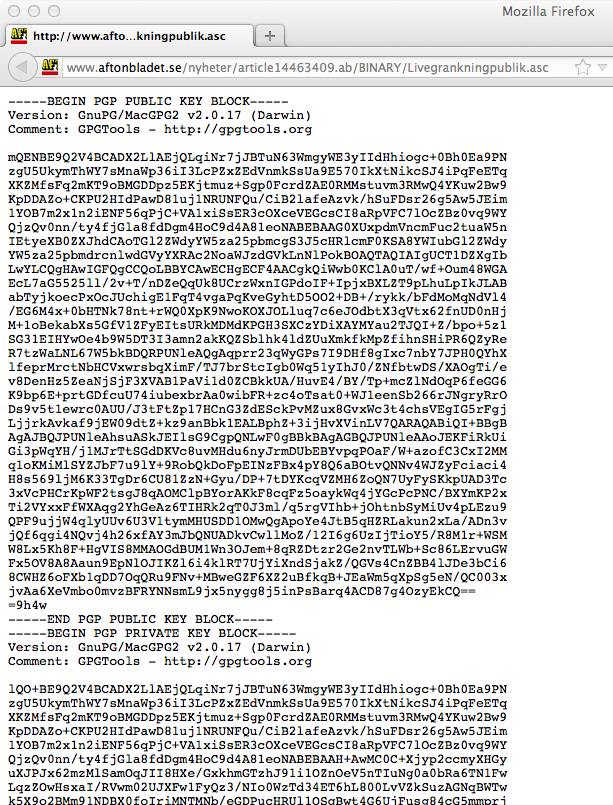
For transparency and responsibility, we like to state that we have 1) contacted the responsible parties incl CERT 2) we dont show the full private key on purpose, although its "out there" already....
Maybe we can switch from encraption 101 to encryption 101 one day......
----
Written by Robban @ 2012-03-04 2012/02/14
Projekt "basecamp" och nya metasploitmoduler för PLC/SCADA-attacker
Vid SCADA-säkerhetskonferensen "S4" som gick i slutet av januari i Miami så presenterades basecamp-projektet, en aktivitet att praktiskt undersöka vilka säkerhetsproblem som finns i ett antal PLC-produkter. De presenterade aktiviteten och resultatet i januari. Resultatet var ganska nedslående, eftersom i princip alla produkterna var fulla med hål, vilket inte torde ha förvånat någon......
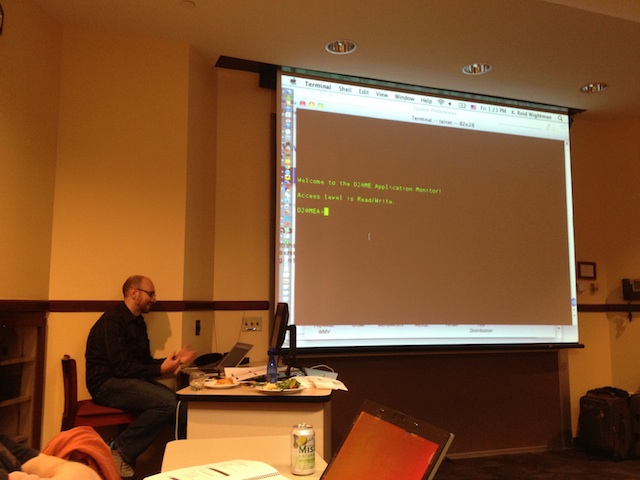
Här ovan demonstrerar projektledaren Reid Wightman olika tricks med en av PLCerna.
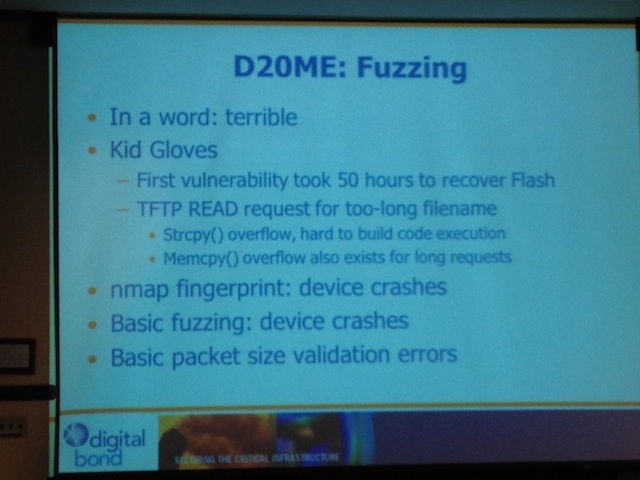
Här nedan kan man se lite kommentarer från testningen mot en av produkterna, D20ME, när man utförde fuzz-tester eller enkla nätprotokollfingerprint-undersökningar. Och exakt så skakigt är det tyvärr.
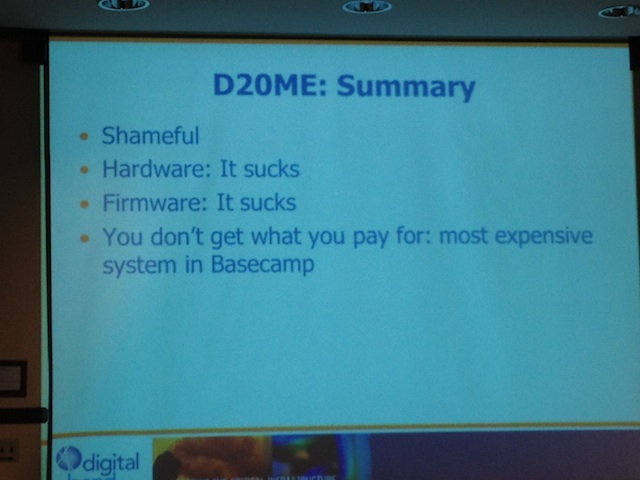
Och testerna mot PLCerna har varit ganska tuffa, vilket man kan se av omdömmena på följande bild...
Efter att ha presenterat projektet och resultaten så har det nu även blivit dags att även släppa verktygen f ör att bruka och återupprepa just projektets resultat.
Dale Peterson från DigitalBond sa nyss på ders blogg:
     "I'll be talking with Chris Jager of NESCO on a webinar next Tuesday about Project
      basecamp and the new tools and modules being released that day"
Det går i linje med det som projektledaren Reid för basecampprojektet sagt tidigare, att man skall släppa verktygen på "valentines day". Och nu är det så dags.
Det finns två blogginlägg på DigitalBonds webbplats om släppen:
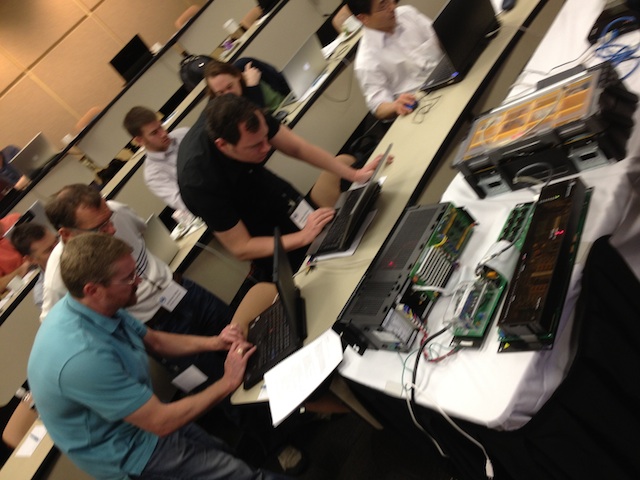
I samband med S4-konferensen fick vi konferensdeltagare möjlighet att djupdyka i tekniken runt projektet, med testverktyg och PLC-utrustning att testa mot. Här håller vi kursdeltagare på och leker med de olika PLCerna som har ingått i projektet.
----
Written by Robban @ 2012-02-14, some minor updates (language clarifications) 2012-02-16 2011/12/06
SANS SCADA Security conference
Förra veckan var det SANS SCADA Security conference i Rom, Italien. Det är fjärde året som konferensen hålls i Europa. Det är en relativt liten, okänd och exklusiv konferens. Drygt 100-talet deltagare. Själva konferenshotellet var nog det lyxigaste hotell som jag besökt - bl.a. hade den en restaurang som hade 3 stjärnor i Michelin-guiden.
Jag gjorde två dragningar. En om lärdommarna från Stuxnet och en annan om behovet av loggning och forensik i process-ITi, och satt i paneler rörande dessa.
En av de bättre dragningarna var från Thomas Brandstetter från Siemens produktcert. Han berättade om Siemens resa efter Stuxnet. Intressant, ärligt och lärorikt. Kul att höra att tillverkarna, särskillt de riktigt stora, kan lära om och göra rätt.
En annan bra dragning var från en säkerhetskille på tyska E.ON som beskrev säkerheten i fjärravläsningsutrustning (mätarna i din lägenhet) och varför iden med en Common Criteria Protection Profile var ganska korkad och missriktad. Främsta anledning till kritik var att "visst det är bra med formell uppsäkring av själva mätardelen, men resten av systemet då?". Kan bara hålla med honom i hans resonemang.
----
Written by Robban @ 2011-12-06
Bokrecension: Letters from Steve
Steve Jobs var en ovanlig person i att han som hög chef på ett multinationellt företag själv läste och svarade på mail. Inte bara till sina anställda och företagspartners, utan även från allmänheten. Denna bok sammanfattar ett antal mailväxlingar som han medverkat i.
Boken är en relativt kort Kindle-utgåva. Man läser ut den på en kväll. Den är smårolig, men inte någon vidare behållning.
Betyg: Svag 3a på en 10 gradig skala.
Titel: Letters from Steve. Inside the E-mail Inbox of Apple's Steve Jobs
Författare: Mark Milian
Sidor: okänt, men ganska få. Finns bara i Kindleversion
Pris: $5
Länk 1: http://www.amazon.com/Letters-Steve-Inside--mail-ebook
----
Written by Robban @ 2011-12-06 2011/11/27
Correction regarding http-headers
I do some talks on subject of SSL, but sometimes errors do occur. One is that i talk about a header called "cache-type: public" to provide caching for nss-based browsers. This is incorrect, the correct header name is "cache-control: public". Sorry for the inconvenience. 2011/11/22Sandlådesnack på Internetdagarna 2011
Tobbe och Andreas kör precis nu ett snack om sandlådeteknik som säkerhetsmekanism i seminaripasset "Anonymiseringstekniker och säkra klienter". Med exempel från jails, chroot, zoner, AppArmor, SELinux och OSX seatbelt-modul. Mer detaljerade exempel ges på hur vi använt OSX sandboxar för att bygga IronFox mm. Desutom så går dom igenom COREs påstådda attack/hål i Apples sandbox, och visar hur detta påstående är felaktigt.
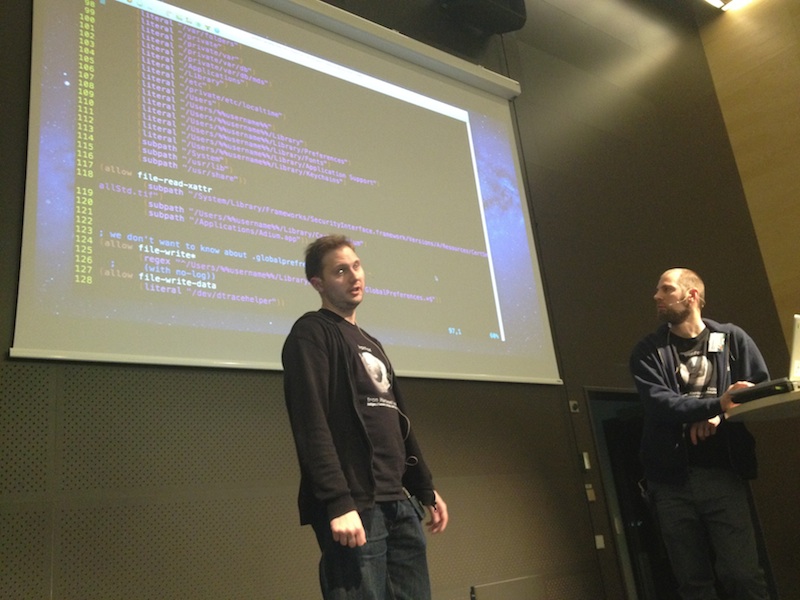
OH-bilderna från dragningen finns här
----
Written by Robban @ 2011-11-22
Firefox add-on of the day: SSLPersonas
SSLPersonas is an interesting add-on that will add visuble ques to the firefox window layout and colors.
The add-on will give you a green, blue, orange or neutral window layout depending upon if you visit a site with Extended Validation cert, Domain Validation cert, bad content or something wrong in the page loaded with HTTPS, or a page without HTTPS access.
Get the add-on here
----
Written by Robban @ 2011-11-22
Användningen av SSL/TLS i Sverige
Vi har haft ett hobby-projekt och tittat lite på hur nätsäkerhetsprotokollet SSL (eller TLS) används i .SE-zonen, främst för webbtrafik. Dvs hur vanligt förekommande är det att alternativet "https" erbjuds istället för enbart den klassiska "http"-varianten.
Vi har tittat lite på statistik från EFF SSL Observatory som beskriver SSL-förekomsten i hela IPv4-adressrymden på det öppna Internet. För Sverige är det lite mer än 13k siter. Räknar man bort egenutgivna cert, utgångna certifikat, certifikat med trasiga tillitskedjor, certifikat för vissa specifika interna tjänster (citrix, webbmail), så återstår snabbt knappt hälften, ca 4400 webbplatser i .SE-zonen som erbjuder sina tjänster via SSL/TLS. Av totalt över 1.1 miljon. Det är knappt en halv procent (0.5%). Inte direkt imponerande siffror.
Vi har genomfört kontroller av ett antal webbar inom olika sektorer vid två tillfällen, en i början av året och en i slutet av året. Inga konstigheter (läs mixtrande med sidorna, hackande, pentest, edyl offensiva eller inträngande) aktiviteter har utförts, utan bara vanligt surfande mot http-varianten och sedan mot https-varianten (om sådan finns) och därefter kontroll av certifikatet, sidan och uppbyggnaden av sidinnehåll.
Eftersom vi valt betraktningsvinkeln "kan jag, om jag bryr mig om den personliga integriteten, min säkerhet som användare och mitt privatliv, nå webbtjänst X via SSL?", så tittar vi på SSL-användningen ur ett lite ovanligare perspektiv. Det vanliga upplägget är "SSL används när det finns pengar inblandade, tex e-handel eller e-banking", där motivationen är en annan - att skydda transaktionen. Motivet i vå kontroll var att se hur mycket tjänsteleverantörer eller demokratiska institutioner (politiska partier, fackföreningar eller media) egentligen avser att skydda sina webbesökare. Svaret på denna fråga är tyvärr mycket nedslående. Var de lite mer än 4000 webbplatser med certifikaten finns i .SE-zonen så är det i alla fall inte här. Inte på de vanliga åtkomstssätten för dessa webbsidor. Tråkigt tycker vi.
Här finns SweSSL-sidorna med beskrivning om projektet.
Här är en artikel i DN 2011-11-21 som beskriver det hela. Artikeln missar ett antal saker, bla så omnämns inte Andreas alls i artikeln trots att han också intervjuades. Det är lite extra tråkigt eftersom han är den stora drivkraften bakom projektet, vilket inte minst utmynnat i hans oförtröttliga arbete med HTTPS-everywhere regelsettet som en del av SweSSL-projektet.
Kopior av våra OH-bilder från Internetdagarna 2011 finns här
----
Written by Robban @ 2011-11-22 2011/11/21
Lösenordshantering, del II
När vi ändå är inne på lösenord, så kan vi tipsa om en till sak man inte skall göra: Anslut inte ditt SCADA-system till Internet och ha ett tre (3) tecken långt läsenord. Det. är. Dumt. Korkat. Tvärpuckat.
Fast det är tydligen så man gör i South Huston, Texas där deras vattenverk/vattenreningsverk blev hackat nyligen.
De kanske tänkte att epitetet "Dont mess with Texas" skulle skrämma iväg allt cyberbus...----
Written by Robban @ 2011-11-21 2011/11/19
Bokrecension: Steve Jobs
Boken "Steve Jobs" av författaren Walter Isaacson är den officiella biografin och levnadsbeskrivningen av Steve Jobs.
Det är en intressant bok om en av samtidens mest intressanta personer, oavsett om man tittar på datorvisionären Jobs, affärsmannen Jobs, världsförändraren Jobs eller människan Jobs. Historien börjar med uppväxten som fosterbarn i Kalifornien.
Med fötterna i 60-talets hippierörelse och med med närvaron i Kaliforniens begynnande hi-techindustri, så kunde Jobs tillsammans med kamraten Steve Wozniak skapa en enkel dator som de uppvisade för vännerna i "homebrew computer club". Den affärssinnade Jobs ville tvärtemot Wozniak sälja datorn som en färdig produkt, inte låta andra ta del av ritningar, komponentlistor eller programvara fritt.
Fokuset för Jobs är på produkten. Att skapa en perfekt produkt. En produkt som tilltalar användaren. En produkt som inte stör eller irriterar användaren. Kommentarer och citat som ofta återkommer i boken är att andra personer inte förstår användaren eller fokuserar på produkten. Scully som tas in från Pepsi Cola, först som en frälsare, men blir sedan alienerad och ihågkommen som en krämare som bara tänker på vinst och pengar. Det finns något fascinerande och intressant att ett av världens högst värderade företag inte prioriterar ekonomisk framgång utan sätter produkten i centrum. Att det verkligen är så i företagskulturen internt på Apple finns det andra som vittnat om, exempelvis den norske utvecklaren som stod bakom Siri. Det finns ju liknande företagsklimat i andra extremt framgångsrika IT-företag, exempelvis Googlei, och Pages klassiska utsago i formaliapappren vid börsintroduktioneni "Google is not a conventional company. We do not intend to become one" och deras fokus på långsiktiga och visionära mål snarare än kortsiktig finansiell avkastning.
Jobs personlighet verkar komma från ett livslångt sökande, sprunget av det faktum att han var ett adoptivbarn. Han har sökt efter andlighet och fastnat för budism. Denna budisms asketiska livsstil, kombinerad med hippirörelsens antimaterialism, satt starka spår i Jobs, främst i hans estetik. Allt skulle göras simplistiskt och stilrent. Detta syntes i de produkter han var med och skapade.
Förutom arbetet på Apple belyses hans tid som avpoletterad Apple-VD, och där han istället startar arbetsstationstillverkaren NeXT, och kort därpå köper loss LucasFilms dator- och animeringsavdeling och skapar Pixar. Pixar utvecklar flera lysande filmer och slår giganten inom området, Disney, på deras hemmabana. Detta resulterar senare i att Disney köper Pixar av Jobs, i form av aktier. Jobs blir Disneys enskilt störste aktieägare. Apple Gil Amelio tar in Jobs och med honom NeXT för att komma tillbaka på banan efter en lång tids utförsrustch. Det innebär en nydaning för såväl företag och Jobs.
Jobs relation till vänner, tidigare flickvänner, släkt, fru och barn avhandlas också. Han har ett ansträngt förhållande till flera, inte minst sitt äldsta barn, en dotter som han i princip förskjutit vid födseln och sedan sparsamt haft kontakt med. Att Jobs inte är en känslosam person som visar empati och inte heller har stark social kompetens framgår tydligt.
Det är en bild av en extremt fokuserad och känslokall person som växer fram. Han skäller ut och är ett svin mot sina närmaste, men han kan vara en charmör mot en person han aldrig träffat. Ofta ger han omdömmet "skit" om saker. Han sågar saker med fotknölarna. Tar man det rätt, låter tiden gå och har tur, så kan det hända att Jobs själv kläcker samma ide några veckor senare. Han har utvecklat en hemkokt härskarteknik som vissa stär ut med, medans andra stöts bort. Jobs filosofi är att bara A-lagspersonerna har rätt att jobba på Apple. Når man inte upp till denna klass, så har man inget pä Apple att göra.
På liknande, osmickrande sätt sätt lyfts vissa pengamässiga incidenter fram. Att Jobs nog lurade Wozniak på en bonus redan tidigt i deras samarbete när de jobbade för Atari. Eller att några av de tidiga Appleanstälda blev blåsta på aktieposter. Att den officiella och sanktionerade Jobsbiografin ger en så osminkad bild är en av bokens stora styrkor.
Jobs olika möten med Bill Gates återges i boken. De två har öden som sammanflätats: Apple II var den första plattform för vilket Microsoft utvecklade applikationsprogram. Microsoft vägrade utveckla för NeXT-plattformen, vilket väckte Jobs vrede. Senare när Apple var på fallrepet efter Scully, nu med Gil Amelio vid rodret på väg ut och när Jobs återkommer så investerar Microsoft 150 miljoner. Fram växer en bild om två totalt olika världsuppfattningar. Bilden blir extra intressant då Gates framstär som personen som är öppen för att sprida sitt system till allt och alla, medans Steve Jobs skall ha total kontroll över hårdvara, mjukvara och innehäll.
En intressant betraktelse om boken är att huvudrollsinnehavaren, enligt uppgift från författaren Isaacson, aldrig läste texten om honom. Det enda i bokprojektet som han blandade sig i var bokomslaget, som han krävde att få fullständig beslutanderätt över. Titta på bilden nedan. Man kan verkligen se att det är Jobs estetik. Stilrent, enkelt, något som sticker ut från massorna. När såg du ett omslag som inte hade en baksidestext sist?

Det finns ett efterord skrivet av Jobs själv. Det är rakt, osminkat och ärligt. Det går att förstå att han velat få boken skriven så att hans barn kan bekanta sig med sin far. En person som var upptagen med att förändra världen. En person som hade liten tid över för familjen. Det är en stark text. Det är en röst från andra sidan graven.
Boken handlar om en av 1900-talets och 2000-talets centrala IT-personligheter och affärsmän. Det är en fascinerande berättelse om hur inte bara datorindustrin påverkas och revolutioneras, inte bara en gång utan flera - först med persondatorns intåg och sedan med post-PC-erans introduktion av pekplattor. Även den gigantiska påverkan som Jobs haft inom andra områden är ytterst pätaglig, fär att inte kalla det revolutionerande: Musikindustrin. Filmindustrin. Telekomindustrin. Detaljhandeln. Införandet av Applestore:s har satt nya standarder för hur man bedriver slutkundsförsäljning över disk. Applestore i NewYork är den butik i staden som har högst lönsamhet per affärsyta. Få eller inga andra personer under vår livstid kommer ha en sådan genomslagskraft eller betydelse för multipla industrier.
Betyget på boken blir 6 av 10. Historien den tecknar, och det osminkade porträttet förtjänar egentligen ett högre betyg. Men det lyser igenom mellan varven att boken fick avslutas hastigt, då Jobs avled plötsligt och före avsatt utgivningsdatum. En del text verkar vara klippt-och-klistrad mellan kapitel, då de är ordagranna meningar som man läst tidigare. En annan intressant ledtråd om att det gick snabbt på slutet är att det häromdagen om ett mail från Amazon.com som omnämde att det fanns en uppdaterad version av e-boken att hämta. I den nya versionen skall en del rättningar och fulheter i bilder och annat fixats till.
Titel: Steve Jobs
Författare: Walter Isaacson
Sidor: 656
ISBN: 978-1451648539
Pris: $18 ($14 i kindleversionen) ~200kr från nätbokhandlare
Länk 1: http://www.amazon.com/Steve-Jobs-Walter-Isaacson/dp/1451648537
----
Written by Robban @ 2011-11-19
Lösenordshantering, del I
Säkerhetsfrågan, som är en återkommande spalt som jag skriver i en branschtidning, var i senaste nummret av tidningen "Det har varit mycket skriverier om lösenord nyligen. Vilka risker och vägar framåt ser du?". Den kom in under rubriken Dags att vässa dina lösenord, vilket väl stämmer, men är inte en heltäckande beskrivning, för vi vill ibland gå ifrån lösenord helt, till förmån för andra autentiseringsmekanismer.
Som alltid är det svårt att uttrycka sig på 3000 nedslag, men i en egen blogg kan man sväva ut lite mer, lägga in referenser och resonenemang. De viktigaste budskapen är:
- Alla siter, tjänster, system och applikationer riskerar att bli knäckta. Har man varit slö när man skapar konton, och använder lättgissad autentiseringsinformation eller samma autentiseringsinformation på flera ställen, så riskerar man dominoeffekter. En faller och därefter faller andra konton man använder sig av.
- Dela inte med dig av ditt/dina lösenord. Det är egentligen lika självklart som att inte dela tandborste. Men ändå förekommer det. Ofta. Och mycket. Kanske mer i vissa kretsar, tex ungdomar som spelar ett spel tillsammans.
- Eftersom vi måste använda olika lösenord på olika siter för att inte åka dit big time , så hamnar vi i i dilemmat med att komma ihåg 20-50, kanske tom 100-talet PIN-koder, lösenord, dörrkoder, mm. Detta måste hanteras på något praktiskt sätt. Skriva ner dem är ett sätt. Men då måste man ha superkoll på lappen. Lägga dem i en krypterad fil är en annan. Men då får man inte glömma okrypterade varianter av filen liggandes och skräpa på disken, efter att man tittat upp ett lösenord. Att använda ett program såsom 1password är en tredje.
- Många siter sparar kopior av lösenorden antingen i klartext eller som enkla hashvärden, ofta i MD5-format. Detta för att ha något att jäföra mot när du angivit ditt lösenord. Om de använder MD5-hashar utan saltvärde (nummer eller bokstäver som blandas med ditt lösenord) som permuterat det resulterade kryptotextvarianten av lösenorden är samma textsträng som sparas övverallt. Det är känt sedan 1970-talet att det är en dum, riktigt dum, ide i lösenordssammanhang. Den dagen som dessa blir röjda, i form av en dump med hashar, går de att jämföra mot databaser där mappade lätta eller svåra hashar redan mappats mot klartext. På 1970-talet var stora databaser med föruträknade klartext-hashvärdesmappningar omöjliga i praktiken, då priset på lagringsmedia var astronomiskt och tekniken gjorde att diskar fortfarande bara kunde spara små datamängder. Detta är inte ett problem numera.
- Metoderna för att knäcka konton har (givetvis) blivit bättre över tid. Numera finns det bra program som nyttjar grafikkortens (GPU) snabbare och betydligt mer paralleliserade datorkraft för effektivare framräkning av hash-värde. Mer om detta nedan.
Lösenordsdumpar, både klartextvarianter och i form av olika varianter av hashvärden dyker upp titt-som-tätt. Exempel på några klassiska dumpar är
- Lulzsec släppte en lista med 62,000 konton och tillhörande okrypterade lösenord i mitten av juni 2011.
- Samma grupp släppte senare en lista med över 750,000 lösenord på pirate bay
- Rockyou.com, med sina 32 miljoner konton och klartextlösenord är en intressant rekordhållare. Även dessa ligger på piratebay och skvalpar.
- Sony lyckades reta upp många med att över tid plocka bort funktioner ur PS3:an, och slutligen ta bort Linuxsubsystemet helt. Motreaktionen blev att nägra analyserade och hackade PS3-an bäde fram- och baklänges. Reaktionen på det blev juridiska brösttoner från Sony. Vilket i denna omgång av ställningskriget ledde till fullskaligt on-linekrig frän främst gruppen anonymous som hackade flera av Sonys onlinetjäster. Över 70 miljoner konton beräknas ha blivit drabbade. Lösenord, kontokortsnummer, etc, tros ha blivit stulna.
- Speltillverkaren Valve, som står bakom spelplattformen Steam blev hackad i november 2011. I det hacket uppskattas omkring 30 miljoner konton ha stulits.
- Dataföreningen Sverige, DFS, blev av med i storleksordningen 25,000 konton+lösenord 2008. Dessa kontonamn o lösenordskombinationer testades sedan åt höger och vänster, och bland annat poliser som hade jobbinformation sparad på gmail
- Aftonbladethacket som också inträffade 2008, av samma grupp som stod bakom DFS-hacket.
- Gratisbio.se som var en av siterna som hackades här i höstas blev av med över 201,000 konton och klartextlösenord. Dvs hittade man listan på någon fildelningssite på nätet, så kunde man direkt se alla personers lösenord. Mänga personers lösenord var intressanta att se. Tex politiker från opositionspartier som hade "valseger" eller "ska vi lyckas?" som lösenord. Många andra hade könsord, referenser till diktatorer och extremismpolitik, etc.
- Bloggtoppen, som hade något i stil med runt 90,000 registrerade användare blev hackad hösten 2011. Lösenorden var MD5-hashar, men utan s.k. salt, så MD5-värdena var standardvärden som går att använda i vanliga lösenordskrackingprogram eller mot vanliga databaser med klartext-hashvärden listade.
Förutom exempel på incidenter, informationsläckage, SQLi-attacker och liknande, så kan vi peka på lite tips från andra håll, hur man skall hantera sina lösenord:
- Svenska myndigheten Post- och telestyrelsen (PTS) har en onlinetjänst för att testa lösenord. Skicka inga riktiga lösenord dit, utan testa bara mönster.
- Microsoft har också en onlinetest av lösenord
- Official Gmail Blog: Choosing a smart password
- Google Accounts: How safe is your password?
- Symantec:s tips för bättre lösenord
- Microsofts tips om att skapa starka lösenord
- ...eller varför inte XKCDs klassiska seriestrip. Bildspråk, fakta, överskådlig.
Om man nu följer råden ovan, testar sina lösenord i testsnurrorna och där får grönt ljus. Har man då skapat ett säkert lösenord? Svaret är, tyvärr, det beror på.... Inte minst sådana enkla förutsättningar som om du råkat välja nått som redan någon annan använt som lösenord, och om detta läsenord glidigt iväg med någon lösenordsdump och knäckts (eller redan var i klartext).
För dem som, mot förmodan, fortfarande inte tror det är lätt att hitta lösenord från hashvärden ger jag några exempel på klassiska missar som gjorts, och så listar jag verktyg som är användbara, och som ingår i alla angripares standardverktygslåda:
- Nu när vi listat några informativa bloggposter från google, microsoft o andra här ovan, ska vi givetvis göra en 180-gradare och berätta vad google har gjort fel: Kolla in den här bloggpostningen från våra vänner säkerhetsforskarna vid Cambridgeuniversitetet i England. Stora dataset (snodda lösenord från rockyou.com med 32 miljoner klartextlösenord, både triviala och extremt komplexa) är utmärkta startpunkter om man vill trycka dem igenom en MD5-funktion och skapa en databas med mappningar hashvärde-klartext. Dataset med riktiga lösenord gör att man göra matchningar komplexa lösenord såsom exempelvis "2bon2btitq" (d673a6ccafb5d7c8353f53c118acf67d).
- On-linedatabaser för att göra uppslag av hashtext och få klartextmotsvarigheten: md5.noisette.ch, http://www.cmd5.org, hashchecker. Givetvis innehåller dessa databaser redan dumpar ifrån rockyou, lulzsec, mfl
- Dessutom finns det regnbågstabeller, som är specialdatabaser som är utformade för att snabba upp lösenordssöknäkning. Ett exempel är FreeRainbowTables.com
- Det finns t.o.m. specialverktyg för de som inte vet vilken typ av hashsträngar de precis stulit. On-lineverktyg såsom hashtype kan berätta det för dig.
- Lösenordsknäkningsverktyg finns det 13 på dussinet. Vi tar några ur högen som verkar poppis för tillfället: JtR, en gammal klassiker som också finns upphot:ad med GPU-stöd, GPU_md5_crack, Whitepixel verkar vara en intressant nykomling, oclHashCat, IGHASHGPU, kommersiella varianter som LHC, eller varför inte en distribuerad Javascriptsbaserad variant. Vill man veta vilken extra knuff det blir med GPU-accelererad lösenordsknäckning, kan webbar som GPU speed estimations for MD5/SHA1/Office 2007/WPA/WinZip/SL3
- Gigantiska samlingar av ordlistor, att använda vid dictionary-attacker. Tex g0tmi1k's bloggpost med ordlistor, statistik, etc
- Eller för den late och exhibitionistiske, släng ut en fråga i diskussionstråden "Lösenordshash, önskas knäckas (hjälp med datorkraft)" på forumet flashback. Flashbackdiskussionen är, om inte annat, en intressant tråd att följa, som internetfenomen eller som tecken i tiden på crowdsourcing.
Klassiska, statiska flergångslösenord är en död teknik. Det har sagts förut. Det tål att sägas många gånger till...
Om man inte redan har fattat det, så finns informationen som beskrivs ovan redan på Internet. Bad guys använder den idag. Det är ingen ide att gnälla om att vi tillhandahåller verktyg eller kunskap om hacking. Ovanstående skrivs för att good guys skall fatta var skåpet står. Om man får för sig att gnälla på den här texten pgr att den lär ut offensiv teknik, så tillhör man kategorien personer som aldrig kommer se var skåpet står. Antagligen så hänger skåpet i en skör tråd ovanför huvudet....
----
Written by Robban @ 2011-11-19
Sociala medier
Idag skall vi lista lite läsvärda texter om samtidens stora hype, de sociala medierna.
The Social Graph is Neither är en väldigt intressant filosofisk text om Sociogram, social grafteori, sociala beteenden och hur man mappar sociala skeden med programkod. Den innehåller nyktra iaktagelser såsom
- "One big sticking point is privacy. Do I really want to find out that my pastor and I share the same dominatrix? If not, then who is going to be in charge of maintaining all the access control lists for every node and edge so that some information is not shared? You can either have a decentralized, communally owned social graph (like Fitzpatrick envisioned) or good privacy controls, but not the two together."
- "There's another fundamental problem in that a graph is a static thing, with no concept of time. Real life relationships are a shared history, but in the social graph they're just a single connection."
- "Social networks exist to sell you crap. The icky feeling you get when your friend starts to talk to you about Amway, or when you spot someone passing out business cards at a birthday party, is the entire driving force behind a site like Facebook."
En annan text är en artikel i USAToday som var ovanligt faktaorienterad handlade om hur företagen bakom de sociala mediatjänsterna samlar mer och mer information om oss, även utanför deras ordianrie domän - deras plattform då vi är inloggade hos dem. USAToday: How Facebook tracks you across the Webb
----
Written by Robban @ 2011-11-19 2011/11/18
Coffee table books, part II
More articles in the interesting serie Large books with nice photographs taken by pros.
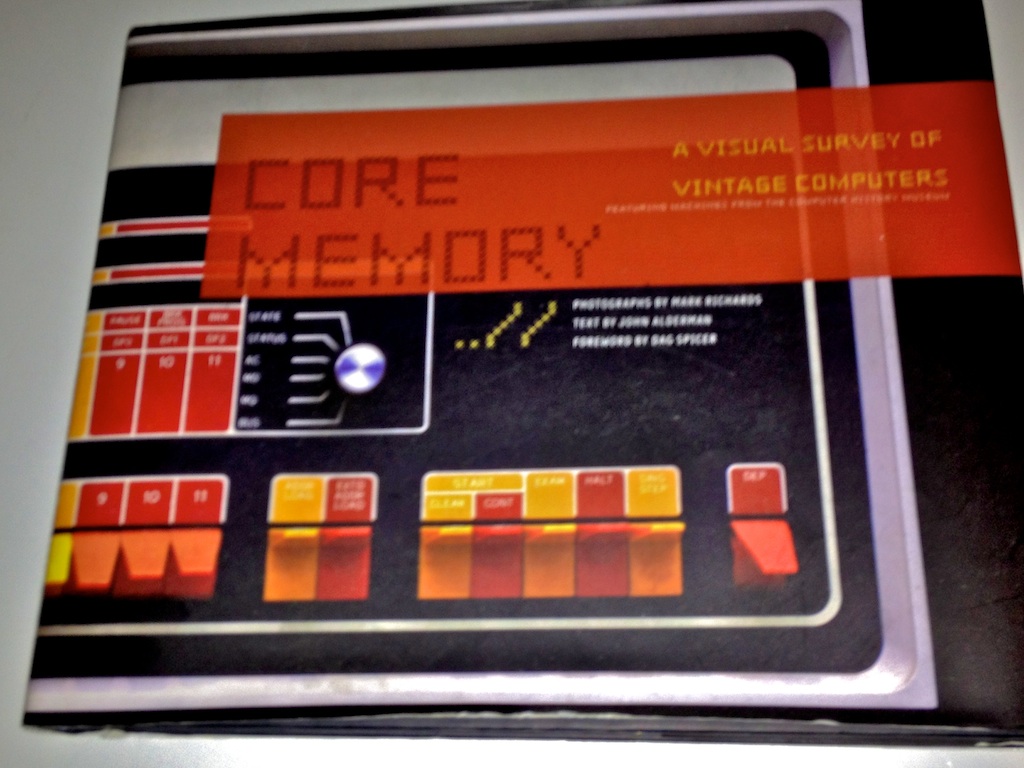
Old computer hardware. Stylish Nice photos. Blowups on geeky details. Nerdvana.
----
Written by Robban @ 2011-11-18 2011/11/16
Coffee table books, part I
All offices must have some fancy books at the coffee corner. Large books with nice photographs taken by pros.
At ROMAB, we have weird habits. This is reflected by our selection of cofee table books. This book is about catastrophes. Natural or artificial. Based on technology or man.
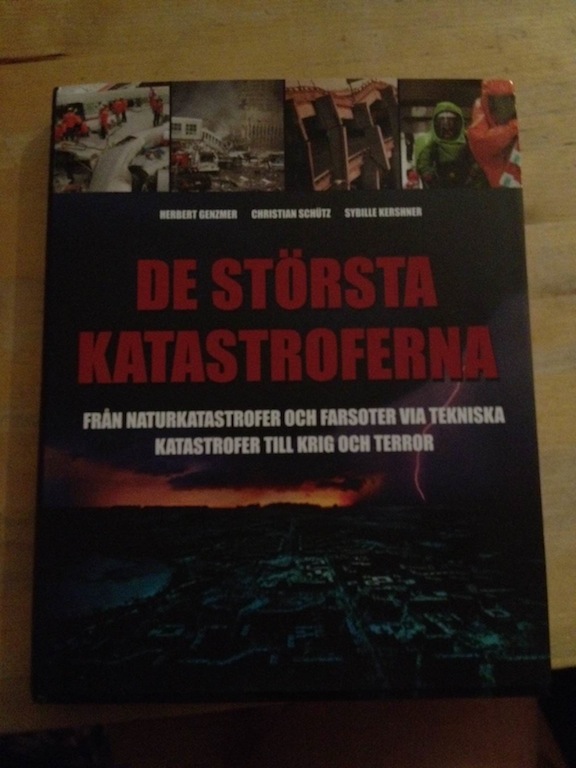
Learn from history. Or live to repeat it.
----
Written by Robban @ 2011-11-16
The EULA From Hell
Just admit it. You will not read that end user license agreement in full. On that tiiiiny weeeny screen. never. ever.
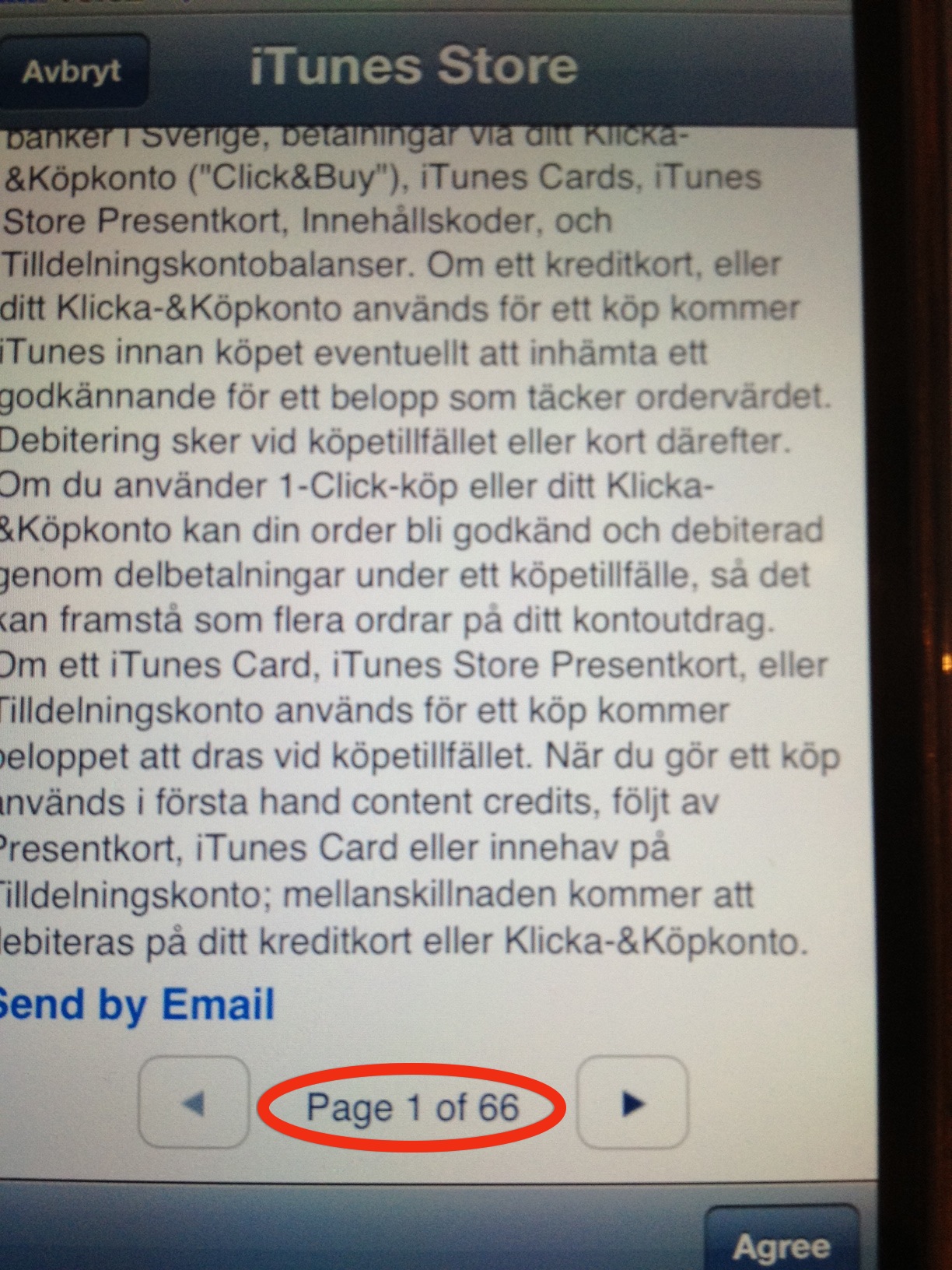
Agree feels like an escape compare to that next page button. 66 pages of bullshit. Also availabe via mail. If you are crazy.
----
Written by Robban @ 2011-11-16 2011/10/28
Bokrecension: In The Plex
Boken "In the Plex" av författaren Steven Levy skriver historien om Google. Med fokus på personerna bakom företaget och företagets olika utvecklingssteg så växer en spännande historia fram. Google:s historia är teknikhistoria som knyter in Internets utveckling och modern IT-utveckling. Inte minst så beskrivs idéer och tankar i utvecklingsprocessen och händelser som påverkat inte bara Google, IT-branschen utan något som hela världen påverkats av.
Levy, tidigare känd från mästerverk som "Hackers - heroes of the computer revolution" och "Crypto", har än en gång gjort ett mycket bra jobb med sitt berättande. Porträtten av personerna som jobbar på Google är intressanta. Företagskulturen, och då inte bara alla balla prylar på kontoret, utan mer det kreativa kaoset och den teknikerstyrda företagsutvecklingen, beskrivs väl. Googles dubbla ansikten täcks också in väl: Å ena sidan transparens, öppna system/öppen källkod och avstamp i akademin vad det informationsdelning, å andra sidan extremt hemlighetsmakeri och sekretess vad det gäller när företaget arbetar med nyutveckling av produkter eller hur man skaffar sig konkurrensfördelar.
Boken, som sträcker sig fram till slutet av 2010 beskriver mängder med produkter som Google tagit fram, och det arbete som skedde bakom kulisserna. Förutom det självklara sökfunktionen och vad som distingerade Googles väg jämfört med konkurrenternas, så täcks tjänster och produkter som Adwords, AdSense, Gmail, Google Earth, Google Maps, Latitude, Google Books, Google Apps, Google Plus, Android, Orkut, Buzz, molntjänsten med flera väl i berättelsen. Bakom alla de olika produkterna finns små intressanta historier.
En intressant bild som Levy målar upp är företaget som vågar gå egna vägar, som vågar utmana vedertagna absoluta sanningar, som vågar gå dit ingen annan gått förut. Det Google utmanar är både den tekniska utvecklingen såsom företagandets inbyggda logik att vinst alltid måste maximeras. En ständigt återkommande diskussion i boken rör "vad är bra för användaren?", vilket ställs mot sådant som kan ge bättre lönsamhet eller lösas på annat sätt tekniskt. I en tid då alla företag lägger ut sin IT-drift, säljer fastigheter och utkontrakterar funktioner, så väljer Google att bygga egna datorhallar, äga sin kommunikationsinfrastruktur och vara världens största datortillverkare. Och det är datorer som medvetet byggs med medvetet undermålig kvalitet. Istället för att köpa dyr hårdvara i form av största routrarna eller de mest avancerade servrarna, så har man valt att utveckla mjukvara som hanterar att moderkort, CPUer eller hårddiskar går sönder. Google har skapat en lösning där feltillstånd är en del av vardagen och att det system man byggt lätt identifierar sådant och kringgår de trasiga noderna för att hämta/bearbeta information i redundant noder. Denna inställning, som torde falla inom begreppet "resillient engineering" är intressant, framsynt och föredömlig. Inte minst eftersom det i boken hävdas att Google lyckas producera sina tjänster till en tredjedel av kostnaden jämfört med närmaste konkurrent. Kanske just de ekonomiska incitamenten kunde få beslutfattare att åtminstone tänka en gång extra på rotorsaken innan man huvudstupa slänger sig ut i nuvarande trender som utkontraktering eller att man alltid måste köpa dyraste prylarna.
Ledarskapsduon (och sedemera trojkan och därefter åter duon) Sergey Brin och Larry Page (Eric Schmidt är den tredje, under en period inhyrd VD) bakom Google ges stort utrymme. Deras personliga egenskaper beskrivs ingående, inte minst deras kompromisslösa inställning till skalbarhet, prestanda och våga sätta extremt ambitiösa mål - något som visat sig vara absolut nödvändighet för Googles utveckling. Inte minst eftersom det resulterar i en fokus på algoritmer och automatisering av alla tänkbara moment inom företaget.
Affärsmässigt så är det intressant att se hur transaktionsformen "auktioner" blivit en så central metodik för Google. Det används externt i deras tjäster för att sälja reklamplats till högstbjudande, men också internt för att skapa konkurrens eller incitament (omvända auktioner) mellan utvecklargrupper.
Utifrån ett IT-säkerhetsperspektiv så innehåller boken ett par intressanta passus om hur Google arbetar internt med frågan. Incidenten när Google får ett intrång som spåras bakåt till Kina och där man misstänker statlig inblandning är ett extra intressant stycke. Boken ger ganska stort utrymme till frågeställningar och Google:s ställningstagande runt hantering av personuppgifter och personlig integritet. Å ena sidan samlar man in extremt mycket information, å andra sidan jobbar man hårt på att bara tillåta program, inte tillåta anställda, få åtkomst till information, loggar, etc.
Bilden av en organisation som försöker leva upp till sitt motto "Don't be Evil" framtträder väl när man läser boken. Mottot skall visa såväl att man distanserar sig mot konkurrenter som använder sig av fula trick i affärer såväl som att man sköter sig när det gäller all den data som samlas in. "Förtroende" (eng. trust) från användare, myndigheter, forskning och andra är en av de viktigaste tillgångarna som Google kan skaffa sig. Efter genomläsning av boken så förstår man valet av motto och att det nog finns en passion bakom det. Dock så ser man samtidigt en bjässe med 20,000+ anställda, med massor av produkter, med närvaro på massor av marknader, vilket gör det svårt att i varje ögonblick verkligen nå detta mål. Avsnitten om de juridiska tvisterna runt monopolisering av marknaden (eng. antitrust), satsningen på Kinamarknaden eller osunda marknadsfördelar visar på just de dubbla sidorna av Google.
Man får hoppas att Google fortsätter att utvecklas i en stil som behåller kreativiteten, som medför nya banbrytande tjänster, och inte minst att man håller fast och styrs av mottot "Don't be Evil" i alla tider. Men frågan som måste ställas är vad som händer den dagen då Page och Brin inte längre styr bolaget. Eller i tider av ekonomisk kris. Vad händer då med all insamlad och bearbetad information? Kommer då användarens behov trumfa vinster?
Jobbar man med IT eller är intresserad av Internet och IT så får denna bok anses vara obligatorisk läsning.
Om man skulle sätta ett betyg på boken så skulle den få 9 av 10.
Titel: In the Plex
Författare: Steven Levy
Sidor: 432 (387 + referenser, etc)
ISBN: 978-1416596585
Pris: $15,74 (kindleversionen) ~180kr från nätbokhandlare
Länk 1: http://www.stevenlevy.com/index.php/books/in-the-plex
Länk 2: http://www.amazon.com/Plex-Google-Thinks-Works-Shapes/dp/1416596585
----
Written by Robban @ 2011-10-28 2011/07/05
Geekfood
I earlier wrote an blog entry about Nathan Myrrvolds "modernists cuisine", cook book. Well, now the man himself have done a presentation on the "making of" at the famous TED conference. And of course, the presentation is geeky, informative and wonderful!
Check it out at TED website
Also, the three authors of the book have made a small Q&A clip about their experience making the book. Watching the clip is also well spent time, if youre geeky. And like food.
More about the book at the Modernist Cuisine site
And a pointer to the earlier blog article can be handy.----
Written by Robban @ 2011-07-05 2011/07/02
Rip n900
Eftersom världens bästa telefon nu inte är världens bästa pga taskig hårdvara så blev jag tvungen att köpa en ny telefon. Tyvärr....
Att tänka i banorna att skaffa en ersättningstelefon av samma modell var väl första tanken. Men n900 är ganska svår att få tag på nu när den precis har utgått ur sortimentet. Och dess efterföljare n950 ( Nokia n950) som verkar riktigt grym, har ju tyvärr inte släppts än. Så man faller mellan stolarna, om man suktar efter Nokias linux-satsningar (och då har jag inte börjat ranta om deras satsning på windowsmobiler än).
Dessutom så jag är inte speciellt sugen på att ta upp c# igen för att börja utveckla på Windows Phone. Att bara ha en telefon och ringa med är ju inte så kul och som nörd så måste man ju koda mot telefonen annars så duger det med en gammal Ericsson telefon med EOS.
Det som jag nu saknar från min n900 är de balla features som tyvärr inte finns på någon annan telefon vad jag vet. Då jag inte är helt insatt i Android utveckling så kan de vara möjligt att några av funktionerna fanns där. Men de funktioner jag talar om är möjligheten att växla (via egna script) mellan 3g och gsm ifall telefonen är på ett visst wifi nätverk (strömsparfunktion) eller att automagiskt backa upp telefonen till en server om man är på "sitt" nätverk. Det mest balla med mina backuper är att det pgp-krypteras innan jag skickar dem till servern. Det är en funktion som jag inte har sett på någon annan telefon på marknaden.
Att kunna scripta en telefon som triggas på events som nätverkförändring, tangentbors som "slidas" fram eller att den går över till ljudlöst på nätterna om man är hemma och byter tillbaka till den vanliga profilen under morgontimmarna är funktioner som jag kommer att sakna. Jag ställer mig även frågande om en sådan funktion någonsin kommer att finnas på en telefon som standard?
Så, i slutändan blev det att köpa en Jesustelefon, som underlättar iOS-utveckling när man har faktiskt har riktig hårdvara att testa på - inte bara via simulator och iPad. Så det gjorde lite ont att ge upp maemo/meego, eftersom den fungerat väl som mobilplattform och haft ett otroligt hackvärde.
iOS är ganska trevligt att koda för och det finns många smarta och genomtänkta funktioner som är väl anpassade för slö hårdvara med lite minne och dålig swap. Mer om det vid något senare tillfälle....
----
Written by Tobbe @ 2011-07-02
Varför iPhone?
iPhone är den bästa telefonen på marknaden om man vill spela spel, och vad är inte bättre än att spela igenom Phantasy Star II från Sega Genius :)
Efter att jag spelat igenom det så blev jag inspirerad att koda ihop en s.k. "Walk Through" (hjälptext för att underlätta navigering och agerande i spelets olika situationer) för det. Arbetet bestod mest i att klippa/klistra, då kartor och textguiden är lånade från stora stygga internet.
Appen som sådan är nu under "review" hos Apple! Jag hoppas att den borde bli släppt under de närmsta dagarna - om jag inte har missat någon gummisnodd i interfacebuilder :) Förutom just den gratisappen så är några appar till på gång om tiden finnes.
På tal om iPhone och Apples värld så måste jag slå på stora trumman för iTunes och iTunes University, som är en av det bästa saker som finns för den som vill vidareutvecklas och lära sig mer.
Nu är det ju inte själva iTunes som är bra, det är väl igentligen en av de sämre mediaspelarna men det finns ju även en del bra funktioner så som AirPlay. Men filstödet är ju inte känt för att vara brett och plugins finns det inte för iOS versionerna. Men man kan leva med en lite sämre mediaspelare om utbudet är riktigt bra och det är precis vad iTunes har. iTunes University är precis som det låter, kurser på universitetsnivå som är filmade, redigerade och gratis tillgängliga i både "sd" samt "hd"-format, tillsammans med eventuellt extramaterial.
Föreläsningarna innehåller allt från it-kurser till historia, medicin etc. Tidigare har jag provat lynda.com för att lära mig mer om olika tekniker, men en kurs från ett universitet med 25 föreläsningar á 60-90min vardera som dessutom är kostnadsfritt är oslagbart.
Särskilt intressanta tycker jag kurserna från Stanforduniversitetet i Kalifornien inom ämnet iOS-utveckling har varit. Det finns filmade föreläsningar från ett par olika årskurser inspelade de senaste läsåren. Innehållet i föreläsningarna sträcker sig från grundläggande dragningar där läraren går igenom såväl programspråk, målmiljöns olika komponenter och ramverk, vidare till olika gästföreläsare som beskriver erfarenheter från sina produktuvecklingar, etc.
Det finns även svenska universitet/högskolor representerade men eftersom iTunes är dåligt på väldigt många sätt så går det inte att lista efter land eller skolor utan det är som allt annat på iTunes Store, man måste vara populär för att synas eller ha bra kontakter in mot Apple som vissa större investments/utvecklingsbolag har. Men hur man kan lyfta fram sina produkter och synas bättre i iTunes Store är en snårig historia som jag kanske kan skriva om någon annan gång.
CS193P Stanford----
Written by Tobbe @ 2011-07-02 2011/06/18
Att använda SSL eller ej
I min senaste krönika i ComputerSweden - "säkerhetsfrågan" så besvaras frågan "Jag tänkte sätta upp en ny webbserver och funderar på att använda SSL. Finns det något jag bör tänka på? Prestanda är en sak som oroar mig.".
Problemet med den typen av skrivelser i kolumnformat i en papperstidning är att man har max 3000 nedslag för att uttrycka sig, något som alltid känns lite väl klaustrofobiskt och för lite. Saker redigeras bort när man trimmar sin text, tankar poppar upp och läggs på hög någonstans i bakhuvudet "jag lägger till det om en stund", etc. Det finns helt enkelt mer man vill ha sagt än det finns textspalt. Så här kommer lite tillägg som kan vara av intresse om man läst originalinlägget i CS 2011-06-17
Till att börja med så kan det vara bra att ge lite pekare till bakgrundsinformation, såsom specifikationen till senaste versionen av SSL (TLS) protokollet, version 1.2. Det kan också vara på sin plats att påminna att inga säkerhetsmekanismer är felfria eller inte går att angripa eller manipulera. Man kan ju också klanta sig kungligt också och exponera sin känsliga privata nyckel också.....
Kommentarer som kunde funnits i artikeln härrör givetvis till kryptoegenskaper såsom nyckellängder och val av algoritmer. De klassiska avvägningarna gäller givetvis även i det här sammanhanget - desto längre nyckellängd, desto mer CPU-kraft. En annan sak som måste påpekas är skillnaden mellan symmetriska och asymmetriska krypteringsalgoritmer, där den sistnämnda används återhållsamt och enbart för att föra över en sessionsnyckel till det symmetriska kryptot.
En sak kan sägas direkt: symmetriska algoritmer såsom RC4 och DES med nyckellängder på 40-bitar (RC4) eller 56-bitar (DES) skall absolut undvikas. De erbjuder inte det skydd man behöver mot kryptoanalys som nyttjar modern hårdvara. 40-bitarsnycklarna är en nedskalad exportvariant av RC4 64-bitarskryptonycklar som togs fram och nyttjades under 1990-talet då export av krypteringsteknologi var likställt med krigsmaterielexport. 64-bitars nyckellängd kan också, rent allmänt anses erbjuda för dåligt skydd.
Vilken krypteringsalgoritm anväds då i SSL? Svaret är - det beror på. Det sker en initial förhandling mellan servern och klienten (såkallad handskakning) där man bestämmer vilken kryptosvit - vilket är en kombination av asymmetriskt, symmetriskt och signaturalgoritm samt vilken nyckellängd som skall användas.
Exempel på kryptosviter inkluderar:
		TLS_RSA_WITH_AES_256_CBC_SHA256 - RSA-baserad nyckelutbyte med 256-bitars AES-kryptering och SHA256 som signeringsalgoritm
		TLS_RSA_WITH_RC4_128_MD5 - RSA-baserat nyckelutbyte med 128-bitars RC4 symmetriskt bulkkrypto och MD5 som signeringsalgoritm
		TLS_RSA_WITH_NULL_MD5 - Null-krypto där data skickas i klartext.
Ett sätt att filosofera runt detta ämne är att titta på vad som är i spridd användning idag. Electronic Frontier Foundation, EFF, skapade projektet "SSL Observatory" där de scannade hela adressrymden för IPv4 efter HTTPS-aktiverade webbservrar pÅ port 443/TCP. Resultatet sparades i en gigantisk databas, vilken man kan kolla vissa värden och certifikategenskaper mot.
En intressant fråga är att se vilken är den vanligaste signeringsalgoritmen som används. En SQL-sökning i EFF-databasen ger snabbt lite fakta. Se tabellen nedan
                +--------------------------+----------+
                | Signature Algorithm      | count(*) |
                +--------------------------+----------+
                |  sha512WithRSAEncryption |        1 |
                |  sha1WithRSA             |        1 |
                |  md2WithRSAEncryption    |        4 |
                |  sha256WithRSAEncryption |       62 |
                |  md5WithRSAEncryption    |    29958 |
                |  sha1WithRSAEncryption   |  1503333 |
                +--------------------------+----------+
Motsvarande sökning i EFF's databas över de förekommande nyckellängderna för asymmetriska kryptot RSA ger nedanstående intressanta fördelning:
		+------------------+----------+
		| RSA_Modulus_Bits | count(*) |
		+------------------+----------+
		| NULL             |       25 |
		| 511              |        3 |
		| 512              |     4165 |
		| 730              |        1 |
		| 767              |        1 |
		| 768              |       38 |
		| 1023             |      977 |
		| 1024             |   869402 |
		| 1025             |       14 |
		| 1026             |        1 |
		| 1027             |        2 |
		| 1028             |       10 |
		| 1032             |        1 |
		| 1034             |        7 |
		| 1042             |        2 |
		| 1048             |       14 |
		| 1080             |        1 |
		| 1152             |        1 |
		| 1204             |        5 |
		| 1212             |        9 |
		| 1234             |        8 |
		| 1280             |       11 |
		| 1369             |        4 |
		| 1536             |      144 |
		| 1538             |        1 |
		| 1543             |        1 |
		| 1548             |        1 |
		| 1800             |        7 |
		| 1825             |        1 |
		| 1924             |        3 |
		| 2009             |        1 |
		| 2010             |        1 |
		| 2014             |        1 |
		| 2023             |        1 |
		| 2024             |       22 |
		| 2025             |        1 |
		| 2028             |        4 |
		| 2038             |        3 |
		| 2040             |        8 |
		| 2043             |        1 |
		| 2045             |        2 |
		| 2046             |        5 |
		| 2047             |      145 |
		| 2048             |   564514 |
		| 2049             |        5 |
		| 2052             |        1 |
		| 2056             |       11 |
		| 2058             |        5 |
		| 2066             |        1 |
		| 2080             |        2 |
		| 2084             |        9 |
		| 2096             |        2 |
		| 2176             |        1 |
		| 2345             |        1 |
		| 2408             |        1 |
		| 2560             |        1 |
		| 3000             |        3 |
		| 3048             |       11 |
		| 3071             |        1 |
		| 3072             |      119 |
		| 3333             |        1 |
		| 3584             |        3 |
		| 3889             |        1 |
		| 4000             |        2 |
		| 4028             |        1 |
		| 4069             |       18 |
		| 4092             |        2 |
		| 4096             |    15574 |
		| 4192             |        1 |
		| 4196             |        2 |
		| 5120             |        2 |
		| 6095             |        2 |
		| 8192             |       38 |
		| 16384            |        1 |
		+------------------+----------+
Där man lätt ser att 1024 bitars RSA-nyckel är överlägset vanligast (~60%), följt av 2048-bitars (~39%) och sedan 4092-bitars (~1%).
EFF-databasen ger underlag till vad som används idag, men det man vill veta om man står i begrepp att skaffa SSL/TLS till sin webb vill man ju snarareveta vad som är bra imorgon och dagen därpå. På Som ett exempel har vi på ROMAB har vi använtt oss av ett 4096-bitars RSA certifikat.
512-bitars RSA-nycklar erbjuder sedan länge ett alltför dåligt skydd och skall inte användas.
Ett annat sätt att fundera över nyckellängder är att se vilka som kravställs i olika sammanhang. Exempelvis kan krav på SSL/TLS-version vara ställt om man hanterar kontokortsinformation, och att inte svaga kryptonyckellängder används.
EV-certifikat som rivs av ganska snabbt och enkelt i texten kan man motivera lite bättre - EV = Extended Validation, en de facto standard baserad på krav ställda mot certifikatutfärdarna, som beskriver på policynivå vilka krav som ställs vid singering av någons certifikat. EV-cert kan för vissa typer av webbplatser vara nägot som påvisar en högre grad av seriösitet hos webbplatsinnehavaren, då denne ansträngt sig extra för att på Internet kunna bevisa sin identitet.
Bilden nedan visar ett vanligt URL-fält från webbläsaren Firefox när SSL används. I vänstra delen av fältet visas domännamnet utskrivet på blå bakgrund.

Bilden nedan visar ett URL-fält från webbläsaren Firefox när s.k. EV-certifikat för skapande av SSL används. I vänstra delen av fältet visas företagsnamnet utskrivet på grön bakgrund istället för domännamnet.

En annan sak att tänka på är vad man sätter för namn på certifikatet, vilket "common name" som används, samt om man vill använda några "alternative names". Common name är ofta www.domän.se. En bra ide kan vara att sätta alternative name till att vara domän.se, sä att SSL fungerar för bägge varianterna, speciellt om ens webbserver faktist servar sidor om man ansluter med http://domän.se (och sedemera även skall fungera för httpS-varianten).
Artikeltexten om HSTS - http strict transport security känns också lite väl kort för min smak. Moderna browsers (i detta sammahang: Chrome, Firefox4) och vissa tillägg (noscript för firefox äldre än 4) har stöd för HSTS - vilket i dessa sammahang innebär att de tolkar rätt http-header och sparar state om HTTPS-tillgänglighet mellan besöken.
Men den mer relevanta och mer intressanta delen av HSTS-hanteringen sker på serversidan. Servern måste skicka en http-svarsheader enligt formen
Strict-Transport-Security: max-age=15768000 ; includeSubDomains
som sedan tolkas av webbläsaren. Efter kolon-tecknet anges hur länge som webbläsaren skall komma ihäg att äteransluta via HTTPS, samt i detta exempel att även alla subdomäner (inte bara www.romab.com, utan sånt som www.labb.romab.com) skall också omfattas av regeln av att enbart ansluta via HTTPS.
Wikipediasidan om HSTS har mycket information om hur man får HSTS aktiverat i en mängd olika webbservrar, eller hur man skriver egen programkod php, javascript, mm som sätter http-svarskodsfälten.
Prestandadiskussionen blev också onödigt kort. Min kollega Andreas har gjort ett antal lysande prestandatester av vanliga webbservrar med olika uppmättningar av SSL som han presenterade i ett par tidigare bloggposter - och på konferensen optimera Stockholm. De bloggartiklarna (bloggpost #1 och bloggpost #2) förtjänar att puffas på lite extra i dessa sammahang.
Med väl webbservern uppe och snurrande med ett x.509-certifikat och SSL aktiverat, så är ett avslutande tips att använda Ivan Ristic:s utsökta on-linetest som finns tillgängligt från SSLlabs för att se hur väl ens SSL-kapabla webbserver är uppsatt.
----
Written by Robban @ 2011-06-18 2011/06/17
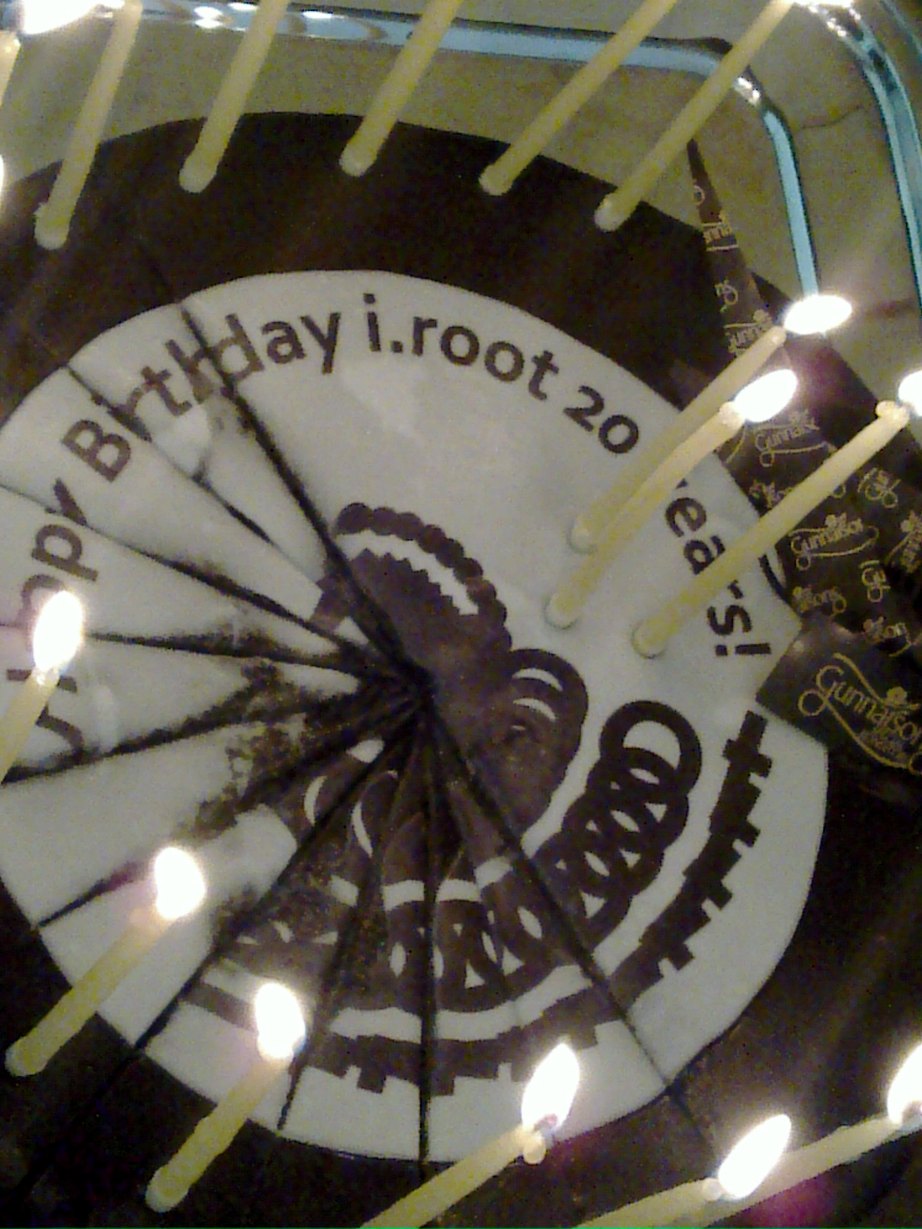
Happy birthday! - i.root-servers.net 20 years young!
Yesterday the nice people of Netnod, the operators of internet exchange points and DNS services, including the DNS root name server known as "i" where throwing a big party. The "i root" was the first root name server runned outside of the US. As Lars-Johan Liman - the "father" of the i root, pointed out in his speech, when the server first started, he could follow the logfile of all DNS queries on screen - it was at a rate at aprox 5 questions per second. Today that figure is quite alot higher - more along the line of 23000 queries per second.
There is something extra to sing "happy birthday" to, what initialy was an Sun3/50, and now is a distributed function with some ~30 servers around the globe.
In the picture below, Liman, Johani, Bygg and Hillbo, all real Internet old boys, sing Happy birthday!
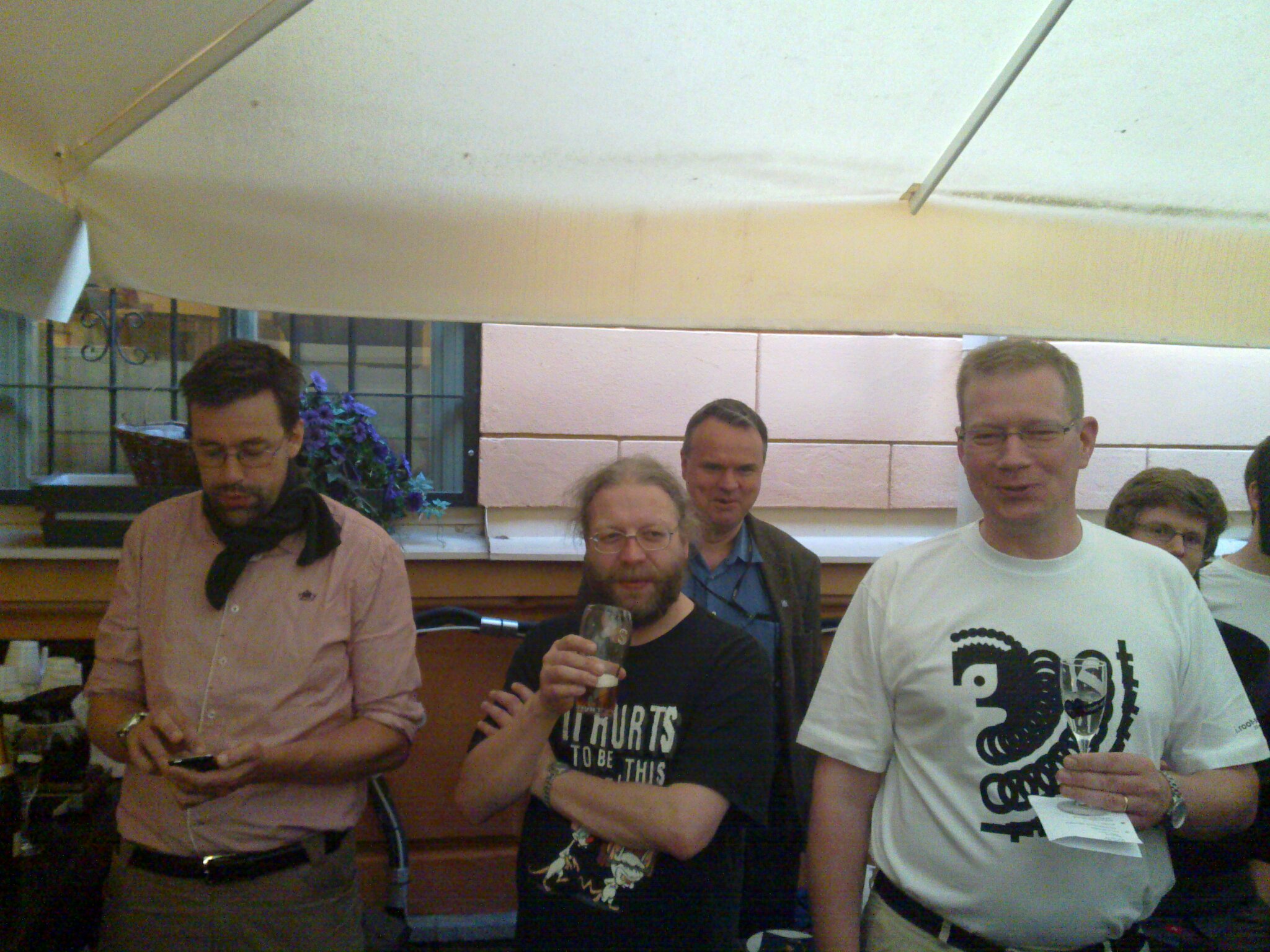
Internet have come along way for the last 20 years. A big "congratulations" to all involved, especially the people who work tirelessly with infrastructure and keeping things working behind the scene.
----
Written by Robban @ 2011-06-17 2011/06/09
More SSL/TLS/HTTPS benchmarks
In an attempt to dispel the myths about issues with https and performance, I've recently held a talk at optimera stockholm on the subject. This blogpost will describe how the benchmarks was done which hardware was used, and some details about the network setup.
Test setup
The test was conducted between a mac book pro, with a core 2 duo cpu running at 2.4Ghz. (client) and an quad intel cpu, running FreeBSD 8.2 (server). The network was a switched network at 100Mbit.
 dmesg | grep -i cpu
CPU: Intel(R) Core(TM)2 Quad CPU    Q6600  @ 2.40GHz (2394.01-MHz K8-class CPU)
FreeBSD/SMP: Multiprocessor System Detected: 4 CPUs
To perform the test, romab.com:s index.html was fetched 10000 times, both concurrently, in sequence, and with and without keep-alives. Three webservers was tested: apache22, lighttpd 1.4.27 and nginx 1.0.2. Each server was then tested with multiple settings, two ciphers was used - aes256 and rc4. In addition, 1024, 2048, and 4096 bit public key lenghts was used to see how the public key lenght impacted the performance.
The first test was to test sequencial connection from a client. Note that this does not really produce a realistic workload as a high load website will most likely have 100s of connection in parallell. Regardless, it gives us valuable insight in how well the servers perform
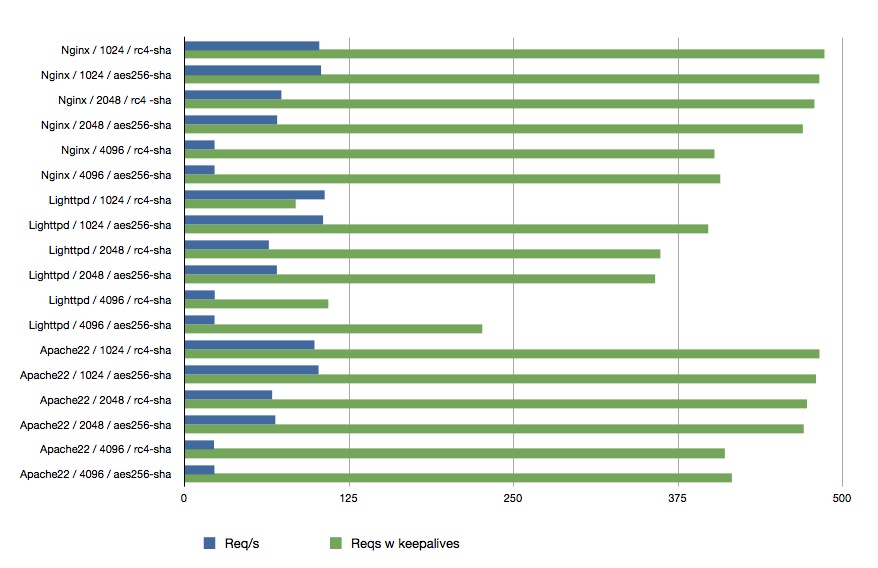
Now, that is interesting. We see that all webservers gains an massive performance increase when keep alives are enabled. We can also notice that ciphers doesn't impact performance that much, but the lenght of the public key sure does! Lighttpd did perform really bad here, and i actually redid the benchmarks, but no - still does not perform well. This might be due to my lack of knowledge on how to configure lighttpd, or that there is a bug with lighttpd on fbsd/ssl or simply that lighttpd does not perform verry well when dealing with https.
To gain a realistic workload we need to add massive amount of clients in parallell, and this is where we start seeing a difference on the servers; apache doesnt allow you to set maxclients above 256, and lighttpd stops giving reliable responses after 400 clients. Otoh, nginx just keeps on going. parallell clients used against nginx was 800, after that i stopped doing benchmarks. The picture bellow illustrates 320 parallell connections, the highest i could go before apache threw in the towel.
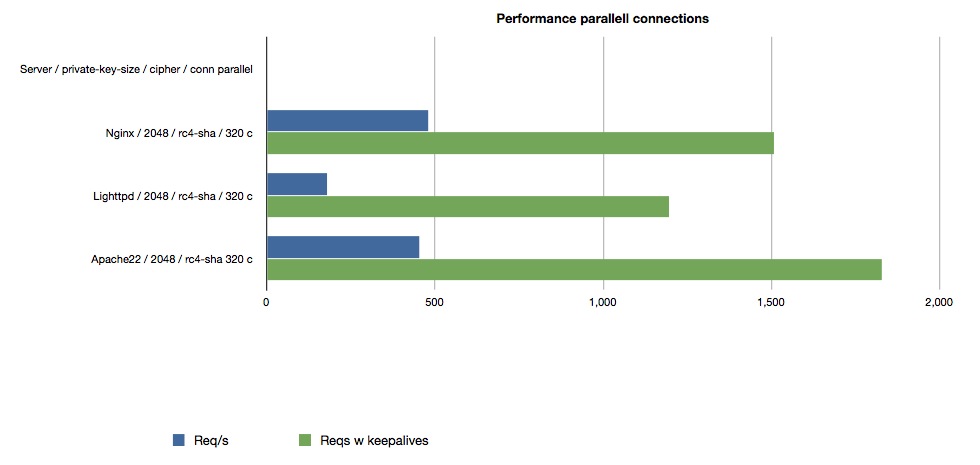
The software used to do the actual tests was the apache bench program, or "ab" as it is called on most unix systems. All graphs seen on this page are created from data that ab produces. Here is a sample on how the raw data looks:
This is ApacheBench, Version 2.3 <$Revision: 655654 $>
Copyright 1996 Adam Twiss, Zeus Technology Ltd, http://www.zeustech.net/
Licensed to The Apache Software Foundation, http://www.apache.org/

Benchmarking nsa.research.romab.com (be patient)


Server Software:        nginx/1.0.2
Server Hostname:        nsa.research.romab.com
Server Port:            443
SSL/TLS Protocol:       TLSv1/SSLv3,RC4-SHA,2048,128

Document Path:          /index.html
Document Length:        5496 bytes

Concurrency Level:      800
Time taken for tests:   11.310 seconds
Complete requests:      10000
Failed requests:        0
Write errors:           0
Keep-Alive requests:    10000
Total transferred:      57131424 bytes
HTML transferred:       54970992 bytes
Requests per second:    884.17 [#/sec] (mean)
Time per request:       904.801 [ms] (mean)
Time per request:       1.131 [ms] (mean, across all concurrent requests)
Transfer rate:          4933.01 [Kbytes/sec] received

Connection Times (ms)
              min  mean[+/-sd] median   max
Connect:        0  353 1238.8      0    6437
Processing:   196  534 540.1    390    3240
Waiting:      196  534 540.1    390    3240
Total:        196  887 1676.8    390    6972

Percentage of the requests served within a certain time (ms)
  50%    390
  66%    390
  75%    391
  80%    392
  90%    395
  95%   6674
  98%   6924
  99%   6949
 100%   6972 (longest request)
2011/06/03
Har cyberkriget börjat nu?
Häromdagen var jag med i P1-programmet "konflikt" ett program som gick under rubriken "har cyberkriget börjat nu?". Det är ett välresearchat program där radions korrespondent i Moskva intervjuar folk på antivirusföretaget Kaspersky och amerikanska professorer och forskare inom krigsföring med IT-inslag.
Programmet har med avstamp i 2010 års Stuxnetincident, ett antal historiska SCADA-attacker samt de senaste månadernas olika IT-incidenter. Sedan blir det diskussioner med folk i studion, bla FRA-chefen, en av hans tekniska IT-specialister samt undertecknad.
FRA-chefen framför att de bedriver en ny typ av teknisk underrättesleinsamlig i ett nytt cyberförsvar. Man får tolka det som ett nationellt IDS-system, som inte bara skall kunna förvarna, utan även leda till "säkrare system". Och de framför slutsatsen att just giftemålet "SIGINT" och IT-försvar är en sällsynt lyckad kombination. Då jag jobbar med granskning, uppsäkring eller säkerhetstester inom samhäsviktig infrastruktur har jag viss erfarenhet inom området, om man så säger. Jag tror personligen inte på hans första påstående - att vi får säkrare system. Bara för att underrättelsetjänsten utför trafik- och innehällsanalys av IP-paket. Det ligger liksom i sakens natur att underrättelse och säkerhetstjänster INTE pratar öppet om säker systemdesign, säkerhetsarkitektur, etc. Och inte heller ger tekniska rekommendationer och detaljerade räd till exempelvis utländska börsnoterade företag. Då dessa organisationer ofta är inhyrda som teknikkonsulter till andra myndigheter i samband med tillsyn, så hamnar man också i knipan att man inte gärna kan sitta på rådgivarstolen och granskarstolen samtidigt.
Men en verklighetscheck visar att en betydande andel av de företag som äger och driver samhällskritisk eller samhällsviktig infrastruktur, eller är exportföretag av sådan teknik inte är svensk eller statlig. Inte heller att de finns i de områden som traditionellt omfattas av underrättelse och säkerhetstjänstens intresse - försvarsindustri, etc.
En annan fråga som togs upp som snabbast i programmet, men kunde ges mer belysning och utrymme är attributionsproblematiken. I Clifford Stoll:s klassiska bok "cuckoo's egg" (en hacker i systemet) beskrevs hur de jagade några som hoppade via 15-talet mellanliggande system för att nå slutmået. Alla systemen befann sig i olika delstater eller länder, allt för att ställa till ett juridiskt-administrativt helvete för det fall att nägon började efterspana angriparna. Angriparna har fördel bara av det faktum att utredarna mäste hitta rätt kontaktvägar och rätt juridiska tillständ (husransakan e dyl) för att bedriva undersökningen.
En av de få saker som man med full säkerhet kan säga baserat på allt som just nu händer i vår omvärld är att det pågår kapprustningar inom IT-baserad krigföring. Länder såsom USA, England, Kina och nu inte minst Iran både ser sig tvingade samt ser ett tillfälle att komma tidigt in i leken. Att vi är på väg mot ett nytt kallt krig är inte lika säkert, även om risken är överhängande.
En annan sak som kan sägas, med mindre säkerhet, men med statistiken talande för sig, är att IT-incidenter förtsätter att ske, att SCADA/ICS/processkontroll och liknande områden där IT är en bärande del, fortsätter att intressera personer som letar efter säkerhetshål i programvaror. Årets Blackhatkonferens verkar vara fullsmockad av olika talare som på ett eller annat sätt skall demonstrera angrepp på PLCer eller prata cyberkrig.
Länk till SRs webbsida om programmet finns via konflikts sida om programmet. Programmet finns även nedladdningsbart i MP3-format.
----
Written by Robban @ 2011-06-03 2011/05/05
ROMAB i full blom
Precis utanför kontoret har vi två gigantiska körsbärsträd. Under några få dagar varje ur så blommar de. Intensivt. Praktfullt. Och fullständigt hänförande.
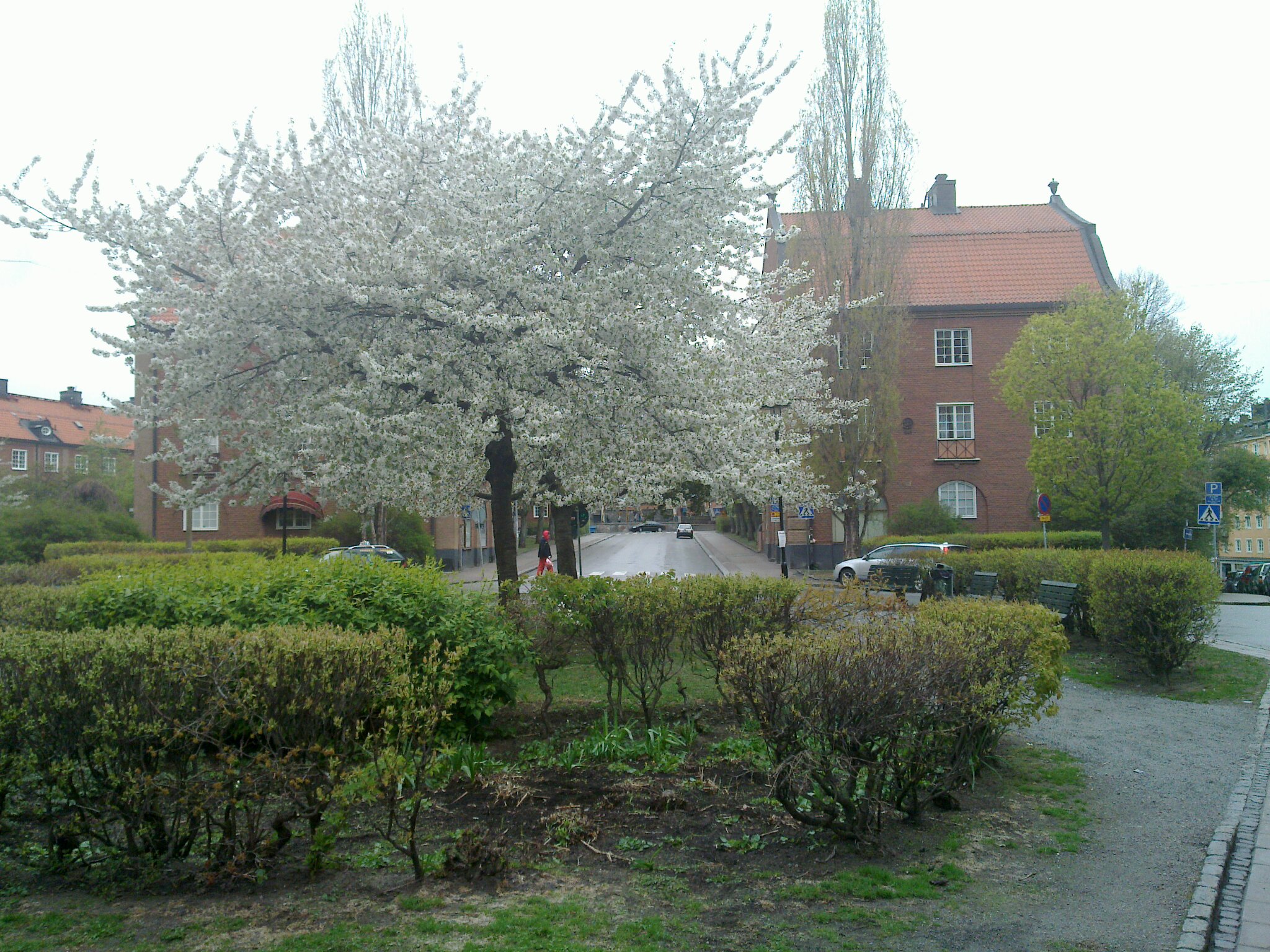
Förutom de magnifika blommande träden är det intressant att iaktaga människorna som passerar förbi rondellen som härbärgerar träden. I princip samtliga som går förbi fiskar upp mobilen och förevigar stunden.
Titta på bilden. Det är lätt att förstå varför.
----
Written by Robban @ 2011-05-05 2011/05/04
New PGP Key
Since my PGP key is about to expire, i've decided to roll it overÂ. For the full key transistion see
keyrollover-andreas.txt.asc, and get the key at https://www.romab.com/andreas.gpg. 2011/03/28HTTPS Obsession
As wiretapping is getting more and more common - or more correctly - as I am becomming less and less naive, i've started to appreciate the HTTPS-everywhere extension for firefox more and more. This have more or less resulted in two things. 1) I get annoyed by sites that do not support https. 2) If I find a site that does support https, I write a rule for it, which I then try to commit to mainline.
Of course, this have the added benefit of providing end-to-end security, preventing firesheep-style attacks, both also ensures that the content requested is the content recieved. This of course requires that the CA:s are behaving, but that is another story.
Different rules apply.
HTTPS and HTTPS Everywhere is nice if you value privacy , and depending on your choices in life, this or this rule might apply for you. Or perhaps you like a little bit of everything and will enjoy both. :-)
2011/03/26Peka Djur 2.0
Tätt på utgivningen av Ironfox 1.0 tidigare i veckan, så har vi nöjet att släppa ytterliggare programvara!
Idag tog Apple in vår app "Peka Djur" version 2 på AppStore! Peka-apparna kom till tack vare att tobbe fick tillökning och tyckte att barnappar vore något att titta lite närmare på
Jämfört med version 1, så har denna version många nyheter och förbättringar.
En av de stora anledningarna till att vi håller på med apparna är att skaffa oss förstahandserfarenhet av utveckling för smartphones, hur själva releaseprocessen fungerar, hur Apple reagerar och hanterar små ISVs, etc.
Det är kul, lärorikt och har en och annan utmaning. Tillexempel kan vi lägga "rejected by apple" till våra CV:n. Det är mindre allvarligt än vad det låter. Vi skulle släppa en fix till 1.0-varianten, dvs 1.0.1, men en bugg hade smygit sig in, så appen fungerade på iPhone men krashade om man gjorde vissa saker på iPad. Det upptäckte Apple i sin "review process" vid antagandet till appstore. När mailet från apple kom med "application rejected" så var man lite arg och svor mellan tenderna om "godtyckliga refuseringar" och "idioti" - man hade ju läst en hel del om folk som fått nobben på olika appar. I efterhand kan man bara tacka John på app reviewavdelningen för mailet med en bra hjälpande text om varför appen inte godtogs, tillsammans med en översänd krashdump och allt.
	"We have included additional details below to help explain the issue
	 and hope you'll consider revising and resubmitting your app."
Visst gjorde vi det - så vi tog Apple på orden. Och nu har vi nått nästa milstolpe - 2.0 ;-)
----
Written by Robban @ 2011-03-26 2011/03/22
Xcode 4
På ROMAB har vi hållit på med en del utveckling för MacOSX och iOS. Förutom vanligt skriptande och hackande av småprogram så har vi testat Apples verktyg för programmering och utveckling. Utvecklingsmiljön (IDE'n) för detta heter Xcode. Det finns flera bra saker med Xcode, bland annat att den är gratis, att kommer med som standard i alla utlevererade Macdatorer, att den har stöd för för flera programspråk (C, C++, Objective-C) samt att den har bra integrerat stöd för att skapa de grafiska delarna av programmet.
Nu har den senaste versionen av Xcode släppts, Xcode4, denna är dock bara gratis för de som har utvecklingkonto hos Apple, annars kostar den 5dollars på App Store. Den innehåller massor med coola saker, tex ny kompilatorback-end (LLVM[1], som genererar optimalare kod och utnyttjar multi-core-CPUer bättre), numera är interfacebuilderfunktionen helt inbyggd, den stöder GIT[2] och använder det som standard - istället för bara subversion som tidigare. Om man har ett program som är utvecklat under tidigare versioner av Xcode så måste LLVM slås på manuellt.
Men ämnet för den här bloggtexten är egentligen den nya debuggern! Den har några riktigt sköna finesser. Här nedan syns en bild med källkoden till "peka" ett av våra projekt. Debuggern kan bland annat göra ganska ball programflödesanalys där minnesluckor och andra programeringsfel lättare kan upptäckas. Enkla saker som att man mistar sig på tilldelning (=) och jämförelse (==) eller att en pekare saknas.

Även mer avancerad debug finns om man kör verktyget Analyze. Som man kan se på bilden nedan så kan den med hjälp av väldigt tydlig grafiska markörer i form av pilar visa hur vissa typer av logiska fel i koden kan uppträda.
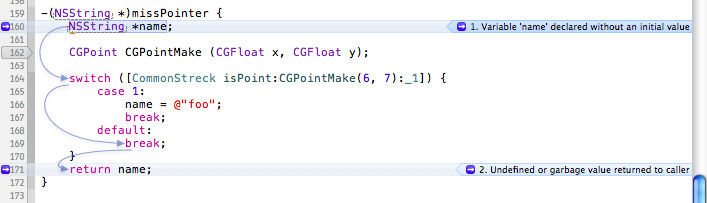
I bilden ovan så syns det ett exempel på när Xcode tycker sig ha hittat en en sträng som ibland inte blir satt till ett värde.
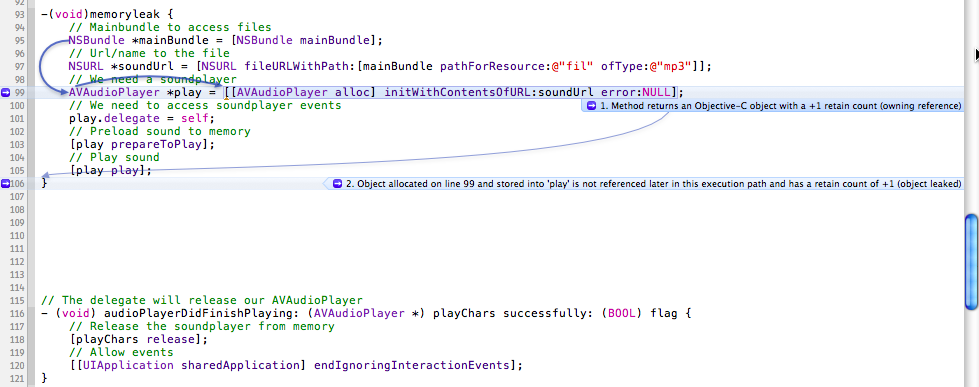
Det går även att hitta minnesluckor som kan missas. I ovanstående exempel så allokeras ljudspelaren lokalt i metoden och det är tänkt att den ska frigöras i dess delegate metod, detta fungarar inte med analysern och spelaren "play" markeras som minnelucka.
Dessutom så finns ju fortfarande kopplingen till Instruments där minneslucker etc kan visualiseras under körning.
[1] För info om LLVM-sviten av kompilatorer, se http://www.llvm.org/
[2] För de som vill veta mer om Xcode4 och git-integrationen rekommenderas github-utvecklarnas blogg: https://github.com/blog/810-xcode-4-released-with-git-integration
----
Written by Tobbe @ 2011-03-22
IronFox 1.0 released to celebrate Firefox 4.0!
Today we release the 1.0 version in synchronization with Mozilla foundations Firefox 4.0 release!Beside testing and porting our IronFox sandbox wrapper to work with Firefox, there are some other enchannsements, including additional support for plugins, for example the Nexus personal banking addon.
Get more information or download the 1.0 version here.
Andreas, Robert & Tobbe
The IronSuite Team
----
Written by Robban @ 2011-03-22
2011/03/21
HTTPS and Performance
Many people state that performance is the main issue that prevent them from enabling HTTPS on the websites. Sure, the difference from doing a simple http get and a full TLS handshake and then a http get is quite huge, especially since it's performing the handshake for every connection. This means that the TLS penalty needs to be paid for every time the user gets a javascript, a stylesheet, a picture etc.
Using the Apache Bench program, we can quite easily determine just how high the performance impact is by comparing TLS with non TLS communication.
The test was done against ROMABs webserver from our office network. Here are some results:
minuteman:https-benchmarks andreas$ ab -n 10000 http://www.romab.com/index.html
This is ApacheBench, Version 2.3 <$Revision: 655654 $>
Copyright 1996 Adam Twiss, Zeus Technology Ltd, http://www.zeustech.net/
Licensed to The Apache Software Foundation, http://www.apache.org/

Benchmarking www.romab.com (be patient)
Completed 1000 requests
Completed 2000 requests
Completed 3000 requests
Completed 4000 requests
Completed 5000 requests
Completed 6000 requests
Completed 7000 requests
Completed 8000 requests
Completed 9000 requests
Completed 10000 requests
Finished 10000 requests


Server Software:        lighttpd/1.4.28
Server Hostname:        www.romab.com
Server Port:            80

Document Path:          /index.html
Document Length:        5569 bytes

Concurrency Level:      1
Time taken for tests:   79.515 seconds
Complete requests:      10000
Failed requests:        0
Write errors:           0
Total transferred:      58040000 bytes
HTML transferred:       55690000 bytes
Requests per second:    125.76 [#/sec] (mean)
Time per request:       7.951 [ms] (mean)
Time per request:       7.951 [ms] (mean, across all concurrent requests)
Transfer rate:          712.82 [Kbytes/sec] received

Connection Times (ms)
              min  mean[+/-sd] median   max
Connect:        0    6 160.5      1   10989
Processing:     2    2   2.6      2     257
Waiting:        0    1   0.4      1      33
Total:          2    8 160.5      3   10991

Percentage of the requests served within a certain time (ms)
  50%      3
  66%      3
  75%      3
  80%      3
  90%      4
  95%      4
  98%      4
  99%      4
 100%  10991 (longest request)
Ok, without doing any deeper analysis, we can see that the important one there is requests per second, (125/sec). Now lets do the same test against With TLS
minuteman:https-benchmarks andreas$ ab -n 10000 https://www.romab.com/index.html
This is ApacheBench, Version 2.3 <$Revision: 655654 $>
Copyright 1996 Adam Twiss, Zeus Technology Ltd, http://www.zeustech.net/
Licensed to The Apache Software Foundation, http://www.apache.org/

Benchmarking www.romab.com (be patient)
Completed 1000 requests
Completed 2000 requests
Completed 3000 requests
Completed 4000 requests
Completed 5000 requests
Completed 6000 requests
Completed 7000 requests
Completed 8000 requests
Completed 9000 requests
Completed 10000 requests
Finished 10000 requests


Server Software:        lighttpd/1.4.28
Server Hostname:        www.romab.com
Server Port:            443
SSL/TLS Protocol:       TLSv1/SSLv3,AES256-SHA,4096,256

Document Path:          /index.html
Document Length:        5569 bytes

Concurrency Level:      1
Time taken for tests:   1476.578 seconds
Complete requests:      10000
Failed requests:        0
Write errors:           0
Total transferred:      58660000 bytes
HTML transferred:       55690000 bytes
Requests per second:    6.77 [#/sec] (mean)
Time per request:       147.658 [ms] (mean)
Time per request:       147.658 [ms] (mean, across all concurrent requests)
Transfer rate:          38.80 [Kbytes/sec] received

Connection Times (ms)
              min  mean[+/-sd] median   max
Connect:      143  145   3.4    145     415
Processing:     2    2   1.5      2     134
Waiting:        0    1   1.4      1     133
Total:        145  147   3.8    147     417

Percentage of the requests served within a certain time (ms)
  50%    147
  66%    147
  75%    147
  80%    148
  90%    148
  95%    149
  98%    155
  99%    155
 100%    417 (longest request)
OUCH! we went from 125 requests per second, to 6.7 requests per second. In addition, the time per request skyrocketed. The reason for this is that we are performing a new TLS handshake for each connection, which is costly.
We can however get significant performance imporvements to this by enabling Keep-alives, and letting the client reuse the TLS session already open.
minuteman:https-benchmarks andreas$ ab -k -n 10000 https://www.romab.com/index.html
This is ApacheBench, Version 2.3 <$Revision: 655654 $>
Copyright 1996 Adam Twiss, Zeus Technology Ltd, http://www.zeustech.net/
Licensed to The Apache Software Foundation, http://www.apache.org/

Benchmarking www.romab.com (be patient)
Completed 1000 requests
Completed 2000 requests
Completed 3000 requests
Completed 4000 requests
Completed 5000 requests
Completed 6000 requests
Completed 7000 requests
Completed 8000 requests
Completed 9000 requests
Completed 10000 requests
Finished 10000 requests


Server Software:        lighttpd/1.4.28
Server Hostname:        www.romab.com
Server Port:            443
SSL/TLS Protocol:       TLSv1/SSLv3,AES256-SHA,4096,256

Document Path:          /index.html
Document Length:        5569 bytes

Concurrency Level:      1
Time taken for tests:   105.949 seconds
Complete requests:      10000
Failed requests:        0
Write errors:           0
Keep-Alive requests:    9412
Total transferred:      58707060 bytes
HTML transferred:       55690000 bytes
Requests per second:    94.39 [#/sec] (mean)
Time per request:       10.595 [ms] (mean)
Time per request:       10.595 [ms] (mean, across all concurrent requests)
Transfer rate:          541.12 [Kbytes/sec] received

Connection Times (ms)
              min  mean[+/-sd] median   max
Connect:        0    9  34.4      0     447
Processing:     2    2   0.1      2       3
Waiting:        1    1   0.1      1       3
Total:          2   11  34.4      2     449

Percentage of the requests served within a certain time (ms)
  50%      2
  66%      2
  75%      2
  80%      2
  90%      2
  95%    146
  98%    147
  99%    147
 100%    449 (longest request)
Quite the improvement! In reality however, keep alives are almost always enabled by default so there a rarely any need to tune it. The big gains are instead usually gained by using agressive caching of javascript, images and stylesheets. Other type of static content can of course also be cached such as iframes that never change. This also have the bennefit of improving performance for non-https acessed content as well.
| HTTP | HTTPS | HTTPS with keepalives | |
| Requests per second | 125.76 | 6.77 | 94.39 |
| Time per request | 7.951ms | 147.658ms | 10.595ms |
| Time taken for tests | 79.515s | 1476.578 | 105.949s |
https://www.romab.com, nu med stöd för HSTS
ROMABs webb är åtkomlig via både HTTP och HTTPS, och vi rekommenderar att använda den senare varianten, för att du som surfare skall veta att du nått till rätt plats.
Om man besöker ROMAB via HTTPS och har firefox4, firefox3 med modern NoScript-tillägg eller Chrome som webbläsare kommer man automatiskt att använda HTTPS vid alla återbesök. Detta görs med hjälp av HTTP Strict Transport Security eller HSTS som det också kallas.
HSTS är ett sätt att få webbläsaren att komma ihåg att en viss webbplats enbart skall besökas via HTTPS (SSL/TLS). Det trevliga med HSTS är att det är en av de där sällsynta tillfällena då säkerhet, användarvänlighet och ekonomi spelar ihop (normalt: välj två av tre. Alla tre går inte att få på en gång). HSTS är transparent för användareni (URLer skrivs om automatiskt).
HSTS är fortfarande en Internet Draft och stöd finns inte implementerad i alla populära webbläsare än. Men vi får hoppas att de som ligger på latsidan snart har fixat stöd också!
Som vanligt vad gäller webbsäkerhetsfixandet så är det Andreas som varit i görningen ;-)
Eftersom vi grävt djupt i hur folk använder (eller rättare sagt inte använder SSL) så kommer vi beskriva HTTPS, HSTS, certifikathantering, EV-cert, och SSL/TLS närmare i en kommande serie av bloggartiklar!
----
Written by Robban @ 2011-03-18
RSA har blivit hackat.
RSA, företaget - inte algoritmen, har precis blivit hackade.Företaget EMC, som äger dotterbolaget och varumärket RSA har en allmän varningssida uppe på förstasidan av sin webb där de talar om hur riktad och avancerad attacken varit (givetvis buzzwordet APT) och att en av konsekvenserna av attacken är att inkräktarna kommit över information relaterad till deras token SecurID:
    "Our investigation also revealed that the attack resulted in
    certain information being extracted from RSA's systems.
    Some of that information is specifically related to RSA's
    SecurID two-factor authentication products."
samt
    "While at this time we are confident that the information extracted
     does not enable a successful direct attack on any of our RSA SecurID
     customers, this information could potentially be used to reduce the
     effectiveness of a current two-factor authentication implementation
     as part of a broader attack."
Det sägs inget närmare vad som stulits - specifik företagsintern information om själva produkten såsom källkod, designdokument, sårbarhetsutredningar. Eller kundspecifik information - vem som köpt vilka dosor, vilka serienummer och "seeds" de har. Bägge kategorierna är var och en för sig riktigt dålig, men kombinationen blir explosiv.
Man måste ju också ta sig en funderare på att det är en så högt uppsatt företagsrepresentant som uttalar sig, och att han pekar på att inga andra delar av koncernen eller produktportföljen är påverkade. Det är ju den förväntade hållningen och det förväntade meddelandet.
Om man i sin organisation använder RSA-dosor (det är en populär produkt, så många gör det) så lär det, förutom att snacka med sin EMC/RSA-representant (som kommer med snömos?), vara läge att skaffa mer information, bättre förstå när/var/hur SecurID används av organisationen samt göra någon egen konsekvensanalys och ev. jobba fram temporärlösningar.
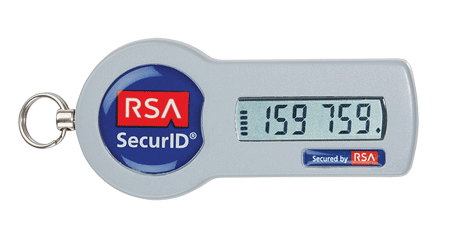
Det är läge att påminna om 10 saker:
- Saker och ting är fortfarande i sin linda. Mer information lär komma ut framöver som ändrar på antaganden, påståenden, analyser och löften.
- Det här är en incident där det snabbt lär förekomma många rykten, vinklingar, spekulationer, falsarier och elaka kommentarer. Som observatör eller drabbad produkt/tjänsteanvändare gäller det att hålla huvudet kallt och försöka extrahera korrekt information och riktiga nyhetsbitar.
- Läs och gå igenom avtalstext, SLA, utfästelser etc som ni har med återförsäljare och leverantörer. Vilket stöd kan ni räkna med från dem? Ersättningsprodukter, kompensatoriska säkerhetsfunktioner, fri konsulttid för att göra "impact analysis"?
- SecurID finns i både hårdvaru- och mjukvaruvariant. En konsekvensanalys får inte glömma den andra varianten. Mjukvaruvarianten kan dessutom finnas inbäddad i andra produkter, som man missar vid en f&rouml;rsta inventering.
- Vet ni verkligen var SecurID används? Internt? För extern åtkomst? Hos leverantörer som tillhandahåller drifttjänster där er data behandlas? etc
- EMC/RSA pratar bara om SecurID. Men vad vet vi egentligen om ifall även andra delar av företaget och andra av företagets produkter kan vara drabbade. Elektronisk certifikatfabrik, katalogtjänst och spärrlisthantering? Storage? Logghanteringsprodukter? Data Loss Preventionprodukter som blivit bakdörrade? etc
- Det står inget närmare om var spår av intråget upptäcktes, när intrånget upptäcktes, hur länge det beräknas ha pgågått, etc. Så det finns stora osäkerheter runt exakt vad som hänt och vilka konsekvenser det i realiteten kan skapa.
- Som alltid så är det läge att observera och lära av andras framgångar och misstag - Hur kommer EMC lyckas i sin krishantering? Hur fungerar mediahantering och kriskommunikation? Hur hanterar de återförsäljarled och kunder? Vad kan du själv dra för paralleller till andra produkter och tjänster ni installerat eller nyttjar - hur skulle en motsvarande incident påverka andra (RSA konkurrenternas) tokens, skraplotter, SMS-lösenord, mjuka certifikat, certifikatutgivare eller liknande?
- Om saker och ting gär riktigt dåligt, hur ersätter man bastjänster såsom autentiseringsmekanismer snabbt, enkelt och billigt. Eller gör man inte det?
- Försvar i djupled. Som alltid så får inte skydd bygga på enstaka barriärer. Förstärkt autenticering är inget undantag. Om SecurID används tillsammans med vanlig autentisering och transportskydd (SSH, SSL, IPsec), så borde det i alla fall inte vara raka vägen in.
I sin officiella anmälan till SEC (tillsynsmyndighet) tror sig EMC att skadan inte kommer påverka företaget finansiellt. Det återstår nog att se.
För att läsa hela varningsmeddelandet, se
här
För att läsa EMC:s info till SEC, se
här
----
Written by Robban @ 2011-03-18
2011/03/14
Geekfood
From time to time one have to let out the inner geek. A good example of that is to cook food from your favourite game. At a geek gathering we brought the ingredients to cook Buzzard wings from World of Warcraft. Some other people cooked things like Mystery Stew. I also cheeted by buying chineese fortune cookies to simulate the in-game fortune cookies.
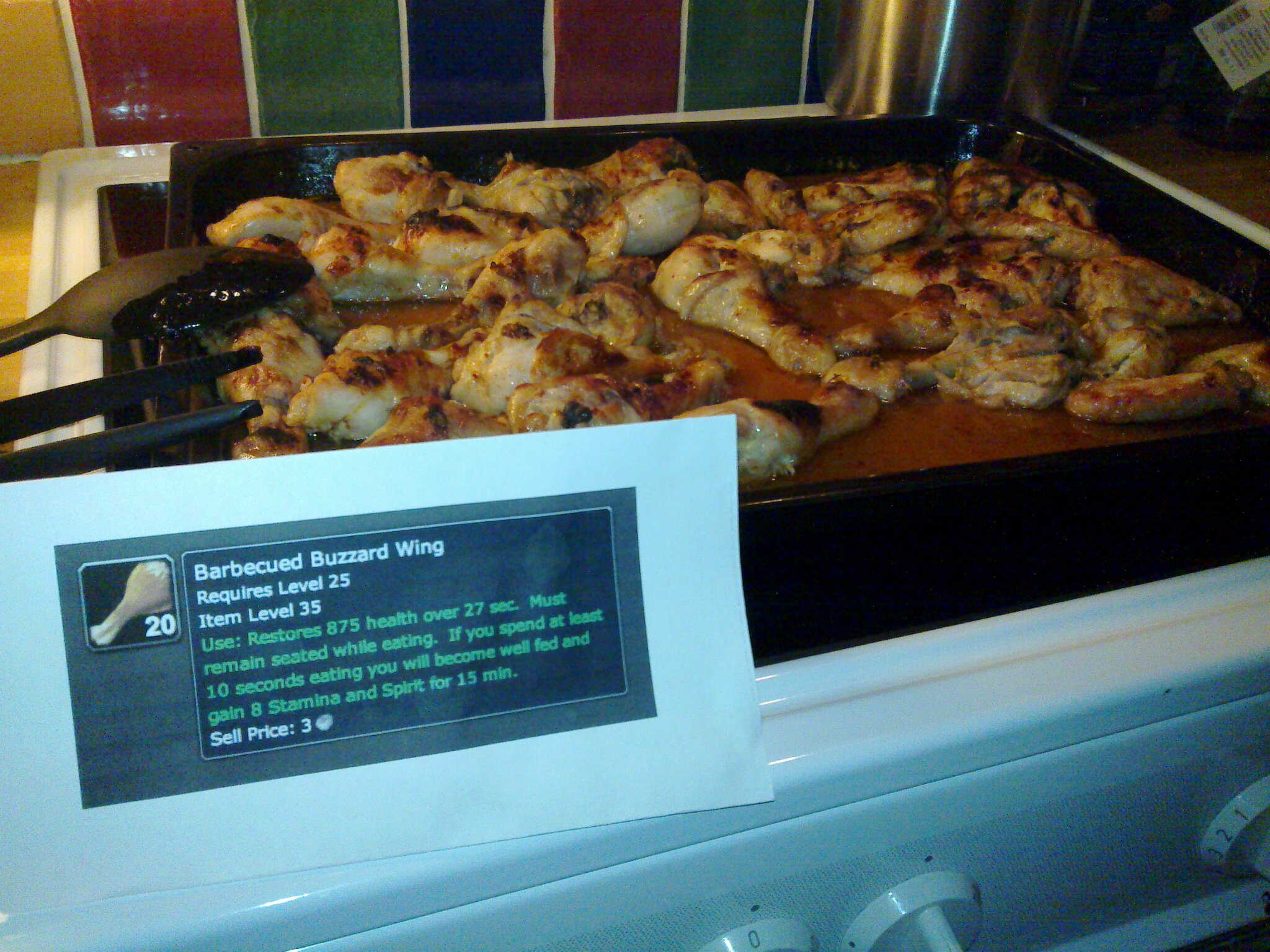
Some more hi-tech and costly geek food can be created by following Nathan Myrvolds receipes from the "modernists cuisine", arguable the worlds most expensive cook book.
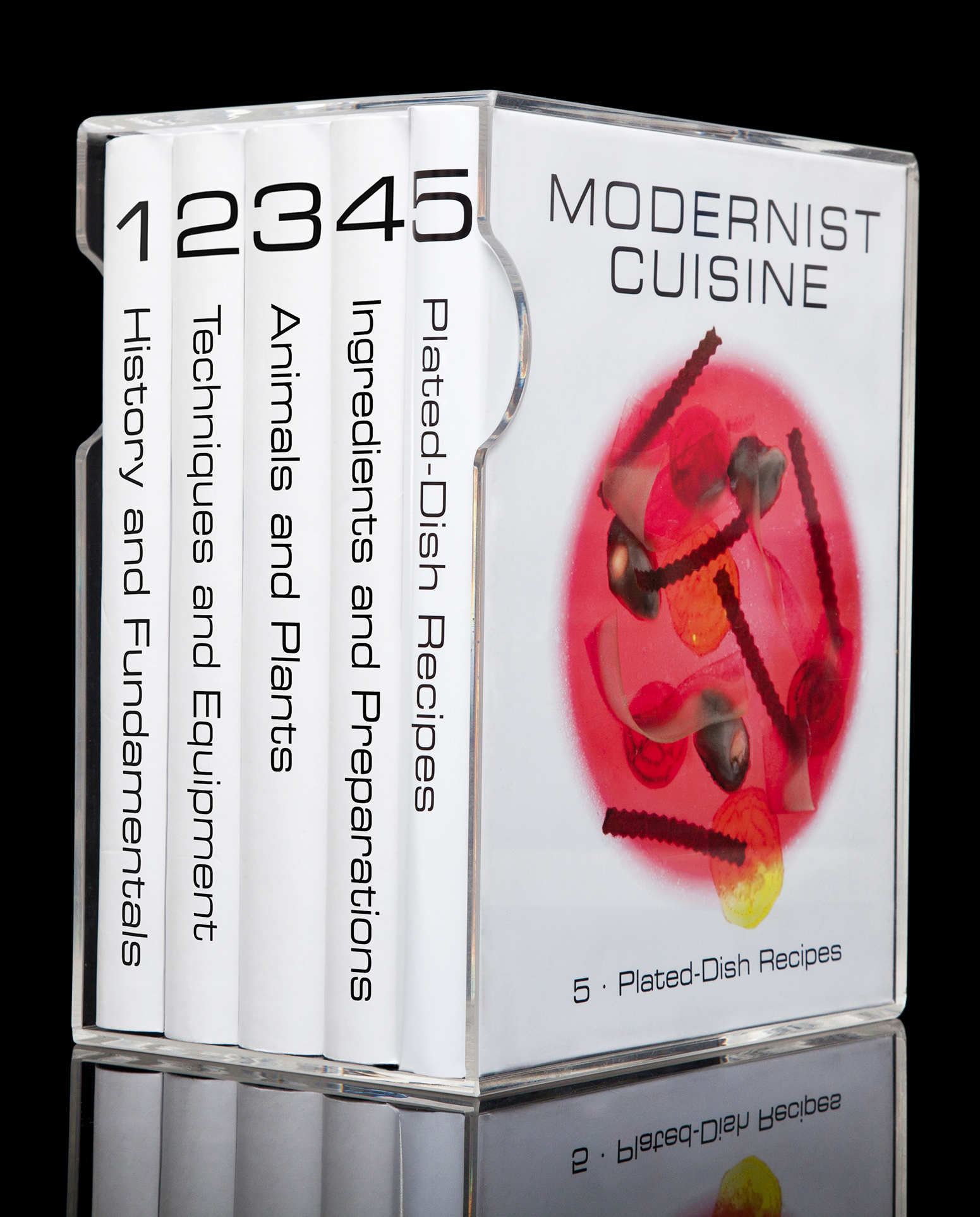
More about the book at the Modernist Cuisine site
----
Written by Robban @ 2011-03-14
Världens första torg uppkallat efter en kryptolog?
I Kista norr om Stockholm pågå byggandet för fullt. Kista är känt som Sveriges Silicon Valley, med närvaro av alla stora elektronik och datorföretag som finns på den svenska marknaden.En dag när jag passerade den relativt nybyggda Kistamässan så såg jag en skyllt som fångade mitt intresse och fick smilbanden att dra lite extra.
Arne Beurling är Sveriges genom tiderna mest kända kryptoexpert och den person som stod bakom forceringen av den algoritm och teknik som nazityskland anväde för sin strategiska samband mellan högkvarteret i Berlin och de olika utsprida armeerna. Systemet som Beurling knäkte kallades för g-skrivaren (geheimschrebier) och var en elektromekanisk krypteringsmaskin från Siemens.
Det är bara passande med ett sånt torg i Kista av alla ställen och man får gratulera exploateringskontor och alla andra inblandade till det lyckade namnvalet.
Mer information om Beurlings insatser kan man hitta i boken Svenska kryptobedrifter och på wikipedia.
----
Written by Robban @ 2011-03-14
2011/03/07
IronAdium 0.4.1 released
IronAdium have been in a great need for some love, and while some stuff have been fixed in current, it is way overdue for a release. Today Ironadium 0.4.1 was relased, and it does have some new goodies, mostly in the config & stability department.
The "big" feature is that there is now possible to send and recieve file thrue ironadium, something that have prevent a few users from using secure im. Not so anymore. For all the details, install instructions and documentation, check out IronAdium here.
2011/03/05HTTPS-Everywhere & Certificate Patrol
Tip of the day is to use two excellent firefox add-ons called HTTPS-everywhere and certificate patrol. These small addons will help you use SSL and they will detect errors, attacks and strange things with SSL/TLS and related certificates at sites you visit.
HTTPS-everywhere is a set of premade rules that rewrites your URLs (and links in HTML documents that you click on) to use the HTTPS counterpart instead of plain text HTTP. This is useful, not from a security perspective, but from a integrity perspective. It will be hard for anyone snooping the net to record or analyse the content you are browsing. They will still be able to do certain types of traffic analysis, since they see the SSL tunnel. A simple example: One can see that you browse www.twitter.com, but they will not see which microblog you are reading. From observing the network traffic. Someone getting access to twitters logs, keyboard logging your PC or performing electronic shoulder surfing would still get it, of course.
Pro: Easy to install and use. It will not be in your way
Con: Lots of sites dont have SSL, so a smart helper program will not help anyway.
Certificate Patrol will keep an eye out for strange things witl the certificate. Like if the web site about to be visited have changed its certification authority since last visit, or if it is about to expire.
Read more about HTTPS-Everywhere at EFF.org and Certificate Patrol at the developers site.
----
Written by Robban @ 2011-03-05
eID
Det har varit en del tumult rörande svenska elektroniska identiteter på senare tid med både upprörda insändare och annat.I ett debacel om eID där en tillsatt utredare tillsammans med en expertgrupp bestående av Fredrik Ljunggren, Leif Johansson, Anne-Marie Eklund-Löwinder, mfl finns i ena ringhörnan och vem som helst i andra ringhörnan, skulle jag varje gång satsa mina pengar på fredrik/leifj/amel & co. Faktiskt en nästintill tråkigt given utgång ;-)
Utredningens betänkande (SOU 2010:104) "E-legitimationsnämnden och Svensk e-legitimation" levereras utan konstigheter, och folk är i allmänhet positiva. Därefter uppstår ett kort och ganska upprört kritik mot den från i princip ett håll - ledningen för Sveriges kommuner och landsting, SKL.
VDn för SKL, Håkan Sörman levererar ett gäng ganska beska kommenterer i SvD-insändaren Fel tänkt om e-legitimation, där han i princip sågar allt jämsmed fotknölarna och påstår att att inga gillar förslaget.
Som svar på detta så kom en replik från utredaren, också på SvD brännpunkt under rubriken Kraven på marknadsaktörer är högt ställda.
Förutom det officiella svaret så finns även Kirei-fredriks blogginlägg i frågan där han på ett lungt och sakligt sätt på lite mer detaljnivå avfärdar kritiken i inlägget Fel tänkt av Håkan Sörman om e-legitimationer.
Därefter startar omgång 2 i boxningsmatchen, där Sörman lägger av en ny salva. Sörman kommer med en replik, som vid närmare analys är minst sagt intressant, speciellt om man ställer den i kontrast mot hans tidigare insändare. Under rubriken Skilj på e-identifikation och plastkort så går Sörman på offensiven samtidigt som han gör någon variant av reträtt. "We are advancing... in the other direction!", typ.
Om det är något som jag är 100%-igt säker på så är det att just expertgruppen har fullständig koll på just skillnaden mellan identifikation och platskort. De är ju sprungna ur internetvärlden och har tagit fram standarder samt levererat storskaliga, fungerande, lösningar på nationell och global nivå, inte suttit och rullat tummar.
Eftersom SvD:s insädarredaktion satt streck i debatten genom att kalla det "slutreplik" så kommer vi nog inte se något mer om det hela på SvDs debattsida. Däremot så har Fredrik på Kirei ännu en gång skrivit en bloggartikel. I inlägget Håkan Sörman gör en pudel visar han än en gång att expertpanelen haft paddlarna i vattnet och hjärnan påslagen, något som uppenbarligen inte Sörman eller hans (eventuella?) rådgivare haft...
Vi får se om det blir en följetång, eller om e-legitimationsämnden får lite arbetsro, så vi kommer frammåt, inte fastnar i tjaffs om saker som faktiskt utredningen tänkt på och jobbat in i förslaget.
----
Written by Robban @ 2011-03-05 2011/03/03
Föredrag om mobilitet och säkerhet för ISOC-SE
Den 24e februari höll jag ett föredrag om mobilitet och ett antal aktuella säkerhetsfrågeställningar för ISOC-SE:s (och inbjudna från föreningen SNUS) medlemmar.
Referat, bambuserinspelning och mer information om föredraget finns här
----
Written by Robban @ 2011-03-03 2010/11/26
IronSettings
Some people just don't like the terminal and vi, I can't understand why? Asking these people to edit text files with key value pairs won't work, so I developed a GUI for them to make it easier to configure IronFox. Almost all properties in IronFox is supported at the moment, and can easily be activated ordeactivated by checking or unchecking boxes.
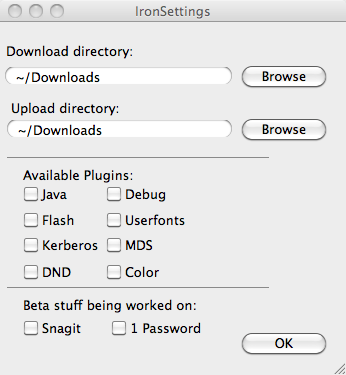
It's my first application developed in xcode, objective c. And I don't know yet if I like the framework or not. Right now the app just works with IronFox but will later support other apps in the IronSuite. IronSettings is in the beta state and feedback would be nice. The app is included a bit ugly in the IronFox-0.8.2.dmg, so if you missed it you might want to look again in the dmg file.
Other stuff done lately is the inclusion of update.sh and updateff.sh. These scripts will search for updates for both IronFox and Firefox, but are not yet activated as we need to do some more testing. These will later be configurable by using IronSettings. Oh, i already found a bug in update.sh on line 70, just after release. Good thing they are not activated yet.
----
Written by Tobbe @ 2010-11-26 2010/11/24
Ironfox now backported to 10.5 and some info about firefox 4
Ok, i haven't blogged in a while, and not updated on Ironfox either. The good news is that i have been bussy. The wrapper have been completly rewritten which will reduce startup time (marginaly probably), and there are now graphical error messages that will pop up if ironfox is unhappy about something. Hopefully you won't notice that :-)
But the biggest news is probably that ironfox have been backported to run on macosx 10.5. Now we need testers. lots of them. The software will be released this week. This and the possibility to add a list of directories that should be allowed for reading and writing are probably the only user visible changes.
Apart from that, ironfox have been tested internaly with firefox4 and if nothing dramatic happens, ironfox with ff4 support will be released the same day as firefox4. The reason that ironfox needs to be updated is because of mozillas new plugin architecture. As each plugin runs in its own separate pluginwrapper, ironfox needs to allow firefox to spawn that process. The good news for us security geeks is that we can contrain the plugins in their own sandbox. This means that even if you allow firefox to write files to your desktop, you don't necessarly need to allow flash to have those rights. Hopefully this will make it much harder to own the browser, as attack vectors get reduced from plugin to plugin ipc with browser :-)
2010/11/04IronFox 0.8.2 Released - Among other things.
An interesting problem when running sandbox application wrappers is that you might have hard time confirming if your application is sandbox or not. The new policy (or more correctly, updated policy) forbids firefox from reading any information from your home directory, and will only display directories allowed for reading and writing (such as the Download-directory). Should you ever be in doubt, simply press cmd+o and if no files are present in the homedir, you can expect the browser to be sandboxed. (of course, you can always read /var/log/system.log if you are in debug mode :-)
Another interesting property with macos is that network shares are displayed regardless if you allow them to be read or not. This of course does not mean that the firefox can access the share, as is displayed here:
But what is happening behind the scenes? Let's find out what it is actually being denied here. Note that this list is bit shortened down to make it easier to read. If you want to know all the gory details, it is present in /var/log/system.log if you run ironfox in debug mode. Note that most of this stuff isnt in firefox, but in the api ff uses to access these resources.
sandboxd[13803]: firefox-bin(20023) deny mach-lookup com.apple.FSEvents
sandboxd[13803]: firefox-bin(20023) deny file-read-data /Users/andreas/Library/Preferences/com.apple.finder.plist
So the sandbox denies the browser access to the mach-port com.apple.FSEvents. We can guess by the names that this is finder related, and assume that finder wants to give us info about the smb share.
firefox-bin[20023]: __SCPreferencesCreate open() failed: Operation not permitted
/Applications/IronFox.app/Contents/Resources/IronFox.app/Contents/MacOS/firefox-bin[20023]: SCPreferencesCreate failed: Failed!
sandboxd[13803]: firefox-bin(20023) deny file-read-data /Library/Preferences/SystemConfiguration/com.apple.smb.server.plist
firefox-bin[20023]: __SCPreferencesCreate open() failed: Operation not permitted
sandboxd[13803]: firefox-bin(20023) deny file-read-data /Library/Preferences/SystemConfiguration/com.apple.smb.server.plist
sandboxd[13803]: firefox-bin(20023) deny file-read-data /Library/Filesystems/NetFSPlugins
Firefox complains that SCPreferencesCreate fails due to the lack of permission. No wonder. We are not allowed to read anything about smb/cifs.
/Applications/IronFox.app/Contents/Resources/IronFox.app/Contents/MacOS/firefox-bin[20023]: Failed to get user access for mount /Volumes/andreas
sandboxd[13803]: firefox-bin(20023) deny system-fsctl
sandboxd[13803]: firefox-bin(20023) deny file-read-data /private/var/db/smb.conf
Interesting, firefox is not allowed to access this usermount, and the sandbox denies it system-fsctl(2), which is a system call for manipulating the filresystem controlling mounted filesystem. We are also denied reading the samba configuration file.
/Applications/IronFox.app/Contents/Resources/IronFox.app/Contents/MacOS/firefox-bin[20023]: 1025 failures to open smb device: syserr = No such file or directory
/Applications/IronFox.app/Contents/Resources/IronFox.app/Contents/MacOS/firefox-bin[20023]: netfs_GetServerInfo returned 2
Firefox complains about the lack of a smb device. News for me that apple had one of those.
sandboxd[13803]: firefox-bin(20023) deny network-inbound 0.0.0.0:52129
sandboxd[13803]: firefox-bin(20023) deny file-read-data /dev/nsmb0
Firefox listening on my network? No. Here we also find the device that firefox was complaining about not being able to open.
/Applications/IronFox.app/Contents/Resources/IronFox.app/Contents/MacOS/firefox-bin[20023]: Failed to get user access for mount /Volumes/andreas
sandboxd[13803]: firefox-bin(20023) deny file-read-data /Library/Filesystems/NetFSPlugins
sandboxd[13803]: firefox-bin(20023) deny system-fsctl
sandboxd[13803]: firefox-bin(20023) deny file-read-data /private/var/db/smb.conf
sandboxd[13803]: firefox-bin(20023) deny network-inbound 0.0.0.0:59283
sandboxd[13803]: firefox-bin(20023) deny file-read-data /dev/nsmb0
Hmmm. It didn't work the first time, but the api will ensure that several attempts are done before it gives up.
/Applications/IronFox.app/Contents/Resources/IronFox.app/Contents/MacOS/firefox-bin[20023]: 1025 failures to open smb device: syserr = No such file or directory
sandboxd[13803]: firefox-bin(20023) deny file-read-data /dev/nsmb0
/Applications/IronFox.app/Contents/Resources/IronFox.app/Contents/MacOS/firefox-bin[20023]: 1025 failures to open smb device: syserr = No such file or directory
/Applications/IronFox.app/Contents/Resources/IronFox.app/Contents/MacOS/firefox-bin[20023]: netfs_GetServerInfo returned 2
sandboxd[13803]: firefox-bin(20023) deny mach-lookup com.apple.netauth.useragent
/Applications/IronFox.app/Contents/Resources/IronFox.app/Contents/MacOS/firefox-bin[20023]: SharePointBrowser::handleOpenCallBack returned -6600
Wow. SharePointBrowser. More news fore me. Firefox concludes that the returncode -6600 is not normal. The sandbox denies access to the IPC to mach port com.apple.netauth.useragent, which we can guess would have handled authorization for us to the share.
sandboxd[13803]: firefox-bin(20023) deny mach-lookup com.apple.netauth.useragent
sandboxd[13803]: firefox-bin(20023) deny network-inbound 10.100.100.88:55691
sandboxd[13803]: firefox-bin(20023) deny network-inbound 10.100.100.88:55690
firefox-bin[20023]: __SCPreferencesCreate open() failed: Operation not permitted
/Applications/IronFox.app/Contents/Resources/IronFox.app/Contents/MacOS/firefox-bin[20023]: SCPreferencesCreate failed: Failed!
sandboxd[13831]: firefox-bin(20023) deny mach-lookup com.apple.FSEvents
Another access atempt to the IPC com.apple.netauth.useragent is being denied, also the possibility to open listening sockets on my ip adress on port 55691 and 55690. SCPreferencesCreate fails, and we are still not allowed to access FSEvents. So there we go. A quick summary of what happens when you try to browse a network share in OSX when you are not allowed to.
2010/06/25Lots of activity in the world of DNSSec
The last weeks alot of things have happened in the DNSSec part of the world. The root (.) was signed last wednesday in a formal key signing cermony. Lots of people involved, among others Anne-Marie Eklund-Löwinder, Jakob Schlyter and Fredrik Ljunggren. Fredrik and Jakob have been seminal to make this all happen! And AMEL is one of the selected few to become a Chief Crypto Officer - thats way cool! Jakob have written a good article what this means for top level domains, now we have a signed root. There is even a video of the key signing cermony.EurID, the registry for the .EU domain have announced that it have signed its zone and that it will be able to allow customers to use DNSSec in .EU. The maintainers of .ORG also say that they've enabled DNSSec, and one of the major news was that the organisation ISOC - internet society, was the first domain to be signed in the .ORG zone.
Get more information on the signed DNS root zone, or on DNSSec itself
----
Written by Robban @ 2010-06-25
2010/06/24
OWASP AppSec Research, day #2
The keynote for day #2 where Steve Lippner from Microsoft. He started out with a quick overview over the history of computer security from the 70's and onward, described how PC's and Internet changed the rules, before reaching the "Secure Windows Initiative" at 1999. During the Microsoft Security push era they did alot, besides the day-to-day work trying to secure the products, they tried to do some more strategic work including implementing the "security science" as an in-house research area. He described that the executive buy-in was surprisingly easy to get, when thinking about it in retrospective. Getting executive in, is essential if you gonna launch a programme that affects 30,000 developers in a large organization.
One of the most interesting things that described was that several thing in the initial SDL book didnt really work well in reality. They have reiterate and come up with several updates and have a programme where there are annual major updates of the method. The version 4.1 came out 2009, a version 5 came out early 2010, and version 5.1 of the SDL is planned to go live in october 2010. Other interesting news that Mr Lippner talked about was the "Simplified SDL" which focus on how to implement SDL in new organisations, and the refocusing of SDL to work better in Agile environment. I'm really thankful to Microsoft to beeing so openminded to make the SDL method non-proprietary and platform agnostic. Mr Lippner described that Adobe was one of the organizations that have adopted SDL. One of the questions from the public was "why does Adobe then have a really bad track record at security?". Mr Lippner's answer, which I see as honest and well balanced, was that Microsoft started to implement SDL in the beginning of 2000, but still was struck by code red and alot of more attacks - it was a long time from starting the initiative and harvesting the fruits from the labour. Comparing with Adobe, they just started in 2009, so they have a long road ahead.
One can read more on the SDL on the Microsoft on their SDL portal, MSDN description of the SDL process, or the SDL blog, a more in-depth description of the Simplified SDL
Pravir Chandra from Fortify software had an interesting presentation entitled "The Anatomy of Real-World Software Security Programs" on different secure development processes. Besides describing some of the step any security officer have to do to be able to sucessfully implement a program, he had some interesting comparisons on different models like Software Assurance Maturity Model - OpenSAMM, Microsoft's SDL, and the Building Security In Maturity Model BSIMM2
Some other guy managed to have a network sniffer running for the whole conference. Again, its really amazing to hear how much sensitive data that gets captured at a SECURITY conference......
----
Written by Robban @ 2010-06-24
IronSuite: IronFox 0.6.2 + IronAdium 0.2 released
We have release updated versions of our sandbox protected internet tools - IronFox (firefox 3.6.*) and IronAdium (Adium 1.3), collectivly called IronSuite.
Now, there is alot more documentation online as well, describing the Design philosophy and one rather extensive compilation of Frequently Asked Questions - FAQ as well as the web's first more complete description of the SandBox Policy Language - SBPL.
----
Written by Robban @ 2010-06-24 2010/06/23
AppSec Research, Stockholm
OWASP, the group that focus on security at the programming and implementation stage of software engineering, is holding a 2 day conference in a sunny Stockholm. Its held at the University of Stockholm in their new Aula Manga. Its a beutiful place, but it is built with one major drawback - no; NO! outlets anywhere in that humongous room....
The keynote where delivered by 2 people from Google: Chris Evans and Ian Fette. The keynote was entitled "Cross-Domain Theft and the Future of Browser Security". They talked about malware detection and protection with the Google blacklist initiative, and more interesting for us - they spend alot of time talking about sandboxing as a good security mechanism, how sandboxing is part of chrome, etc. Google seem to focus alot of their attention for protecting the client environment by sandboxing the render process in Chrome. The problem with this approach is that add-ons and extensions still might be unprotected.
The 2 most interesting other talks I attended during the day where Ivan Ristic talk called "How to Render SSL Useless" and Steve Ocepek and Wendel Henrique's talk entitled "Owning Oracle: Sessions and Credentials". Istvan describe 10 basic errors many sites have - many problems which errodes the trust that SSL/TLS is suppose to create for you.
The Oracle session was quite interesting, since they focused alot on demoing their attacks. They showed their home brewed tool "thicknet" and "vamp" to do some session hijacking. This is of course not something new in general - tools like hunt, juggernaut, ettercap, etc, have been doing this things for ages. The interesting part here is the decoding of the TNS, SQLNet and similar. The different cases they demoed included injecting SQL statements, downgrade attacks that forced old type DES encrypted passwords beeing sent and sniffed, and sniffing of windows challenge-response that got captured and cracked with your standard windows password cracker.
Ocepek and Henrique's tool, thicknet, can be found here
----
Written by Robban @ 2010-06-23 2010/04/21
More ironfox modules.
Ironfox now supports a few new modules, which allow for kerberos/spnego auth and the propriatry 1passwd plugin. Nexus personal support is also in the works, and will most likely be included in the 0.4 release.
Another idea is to add a gui for configuration instead of allowing all functionality. This would most likely include some sort of menu for configuring which plugins that are to be allowed. Ironfox now supports (besides basic firefox functionality) java, flash, kerberos & 1passwd. If i can find any site besides apple.com that uses quicktime, it will most likely be added aswell.
2010/04/06Ironfox 0.3 released
For those interested with playing around with a sandboxed firefox, ironfox is now available. It's only available for osx 10.6. Note that the app requires firefox 3.6 to be installed in /Applications for it to work. 2009/09/21Samba and kerberos
To use samba with kerberos is not so hard. First you need a KDC, in this example we will use Windows 2003 Server. Fix kerberos on the machine where samba will be installed.krb5.conf
[libdefaults]
        default_realm = DOMAIN.TLD

[realms]
        DOMAIN.TLD = {
                kdc = x.x.x.x
                admin_server = x.x.x.x
                default_domain = domain.tld
        }
Simply install samba on a server, and configure it.
Some other parameters can be good to, but we skip this for now.
smb.conf
[global]
   # This option specifies the kerberos realm to use.
   realm = DOMAIN.TLD

   # In this mode, Samba will act as a domain member in an ADS realm.
   security = ADS

   # Specifies whether Samba should attempt to maintain service principals
   # in the systems keytab file for host/FQDN and cifs/FQDN.
   use kerberos keytab = yes

   # This variable controls whether Samba clients will try to use Simple and
   # Protected NEGOciation (as specified by rfc2478) with supporting servers
   # (including WindowsXP, Windows2000 and Samba 3.0) to agree upon an
   # authentication mechanism. This enables Kerberos authentication in particular.
   client use spnego = yes

   # By specifying the name of another SMB server or Active Directory domain
   # controller with this option, and using security = [ads|domain|server]
   # it is possible to get Samba to do all its username/password validation
   # using a specific remote server.
   password server = x.x.x.x

   # This sets the NetBIOS name by which a Samba server is known.
   netbios name = server_name

   # This controls what workgroup your server will appear to be in when queried
   # by clients. Note that this parameter also controls the Domain name used
   # with the security = domain  setting.
   workgroup = DOMAIN.TLD

   # This boolean controls whether encrypted passwords will be negotiated
   # with the client.
   encrypt passwords = true

   # If set to yes, Samba treats the share as a Dfs root and allows clients
   # to browse the distributed file system tree rooted at the share directory.
   # This one is for windows clients
   msdfs root = yes

[theshare]
   # This parameter specifies a directory to which the user of the service is to be given access.
   path = /tmp

   # If this parameter is yes, then users of a service may not create or modify files in the service's directory.
   read only = no

   # This controls whether this share is seen in the list of available shares in a net view and in the browse list.
   browseable = yes

   # If this parameter is yes for a service, then no password is required to connect to the service.
   guest ok = no

   # This is a list of users that should not be allowed to login to this service.
   valid users = user1 user2 user3
Add the samba users you need, set any password, it will not be used anyway.
smbpasswd -a user1Samba used the default krb5.keytab, so you can't specify where the keytab will be located.
In this case we have a AD-server where the users are stored, add a user as a service ex. svc-computer_name-cifs. Map the user with ktpass
ktpass -princ cifs/server.domain.tld@DOMAIN.TLD mapuser svc-computer-cifs -crypto RC4-HMAC-NT -ptype KRB5_NT_PRINCIPAL +rndPass -out krb5.keytab
RC4-HMAC-NT is the strongest encryption offer on 2003 server, on 2008 server you can have up to AES-256.
Move the keytab in a safe way to the samba server(/etc/krb5.keytab).
Test if it works
smbclient //server_name/theshare -d3 -k -L server_name -U user1Now it should be possible to mount the Sambashare on Linux and Mac after you autheticate whith kinit. A Windows computer in the domain can connect to the Sambasshare directly after you have logged on with a valid user.
----
Written by Tobbe @ 2009-09-21
2009/07/10
Using Active Directory as an LDAP server for unix
Using AD as an ldapserver is quite usefull, as you do not need to manage users on all hosts, nor do you need to configure printers, groups etc in more than one place. It also allows for central authentication for all users, ie, they have the same password in unix and windows. It is recommended that you use kerberos instead of ldap for autentication however.Sometimes there are reasons to just go with ldap, and not involve kerberos at all. This is usually the case when you are working in a nonfunctional organization where it is impossible for the unix admins to gain help from windows admins etc. Kerberos requires some fiddling with keytabs. More on that in a later post.
To get started, you first need to install services for unix on one ad-server. The installation forces a reboot, so keep that in mind when selecting the dc. The installation defaults are ok, as they do not start any services on the ad-server, except for the nfs client which can be disabled after installation. You can find sfu as a free download from MS here:
Once sfu is installed and the server is rebooted, you will have a new tab called unix attributes in active directory users and computers. Now we can start adding users that are needed for solaris. The first step is to create a proxy users that solaris will utilize to make ldap queries. Create a user that is a member of the "domain guests" security group. It does not need any more memberships.
Disable password expiration and enable that the user can not change his password. Be sure to remember the password. The boring windows-stuff is now completed and we can move on to confiugre solaris. The solaris version we are targeting is solaris 10. Note that solaris pre update 6 is quite buggy when it comes to ldap, so you might want to patch it up a bit before starting to play around with ldap.
First, start by editing /etc/nsswitch.ldap. This file will later overwrite nsswitch.conf when you start the ldapclient command. A good idea is to only use ldap for passwd and group entries. if you use the defaults, DNS will stop working, and a lot of stuff will be slower than neccessary.
here is an example of a nsswitch.ldap file that is basically a standard nsswitch.conf copied to nsswitch.ldap and then tweaked a bit.
bash-3.00# grep ldap /etc/nsswitch.ldap
passwd:     files ldap
group:      files ldap
printers:       user files ldap
The next step is to initialize the ldap client. This is a basic config that probably will work if you change romab domains for your own, but note that we are using simple binds here, which IS A BAD IDEA as passwords are sent in plain text to the ldap server.
ldapclient manual \
-a credentialLevel=proxy \
-a authenticationMethod=simple \
-a proxyDN=cn=proxyusr,cn=Users,dc=research,dc=romab,dc=com \
-a proxyPassword=yourpassword \
-a defaultSearchBase=dc=research,dc=romab,dc=com \
-a domainName=research.romab.com \
-a defaultServerList=10.200.2.3 \
-a attributeMap=group:userpassword=msSFU30Password \
-a attributeMap=group:memberuid=msSFU30MemberUid \
-a attributeMap=group:gidnumber=msSFU30GidNumber \
-a attributeMap=passwd:gecos=msSFU30Gecos \
-a attributeMap=passwd:gidnumber=msSFU30GidNumber \
-a attributeMap=passwd:uidnumber=msSFU30UidNumber \
-a attributeMap=passwd:uid=sAMAccountName \
-a attributeMap=passwd:homedirectory=msSFU30HomeDirectory \
-a attributeMap=passwd:loginshell=msSFU30LoginShell \
-a attributeMap=shadow:shadowflag=msSFU30ShadowFlag \
-a attributeMap=shadow:userpassword=msSFU30Password \
-a attributeMap=shadow:uid=sAMAccountName \
-a objectClassMap=group:posixGroup=group \
-a objectClassMap=passwd:posixAccount=user \
-a objectClassMap=shadow:shadowAccount=user \
-a serviceSearchDescriptor=passwd:cn=Users,dc=research,dc=romab,dc=com?sub \
-a serviceSearchDescriptor=group:cn=groups,dc=research,dc=romab,dc=com?sub
Does it work? A good test is to do a getent passwd username and see if the user appears correctly.
bash-3.00# grep andreas /etc/passwd
bash-3.00# getent passwd andreas
andreas:x:10000:2500::/export/home/andreas:/bin/sh
If that whent well, you only need to configure pam to start being able to log in with users configured in your active directory. Here is a sample pam configuration that you might want to use:
/etc/pam.conf:
other   auth required	pam_unix_auth.so.1 server_policy
other   auth required   pam_ldap.so.1
This enables pam authentication for ssh. If you need it for login, simply change the login directives as above.
/etc/pam.conf:
login   auth required   pam_unix_auth.so.1 server_policy
login   auth required   pam_ldap.so.1
This configuration has several security issues. Passwords are sent in clear text from the client(sol10) to the server(AD) so all users passwords will be exposed. This can however be fixed by using TLS:simple instead of a regular simple bind. It Also have the problem of the data being replied from the server can be manipulated in transit, which means that if we use solaris RBAC feature stored in the LDAP, additional roles may be added, or the uid number may be manipulated. Using TLS is a must if you are intending to use this.
Also note that the uid attribute is not indexed by the default SFU installation. For performance reasons, you might want to add this via the active directory schema snap-in. If it is not visible as an available snap-in, start cmd.exe and type "regsrv32 schmmgmt.dll" and it should become visible in the mmc.
There are several security considerations with this configuration. Besides not using TLS, the most noteable problem is that pam_ldap.so.1 in solaris ONLY handles authentication, there is no way that you can group users so that only certain user may log in to server X while other are allowed to server Y. A better approach is to use padls pam_ldap, which offers a lot more options. The best way is probably to use the combination of solaris nss_ldap, pam_ldap from padl and then use kerberos for autentication. It will give you centralized autentication and authorization, and will not send any passwords over the wire except when the proxy user binds, and when a users uses su. The su problem can be mitigated with kerberos aswell, but a compromised server will expose the principals password if su is used. 2002/09/09
Using Active directory as a unix KDC - Quick start
The use of kerberos in unix environments is often neglected due to the imagined complexity of configuring such an environment. Bellow is a step by step guide on information how to integrate kerberos via active directory with unix to provide users with a secure single sign-on experience.
While most guides, some of them good, others lacking detail, try to explain too much about the protocol, this guide tries to be quick and easy to use, and tries to avoid too many details and instead focus on actions that needs to be done.
The first thing that needs to be done is to create a shared secret between the unix host and the KDC/AD. This is done by using the ktpass.exe utility, bundled with 2003 in the support tools directory. Note that ktpass.exe is updated regularly, and using a version below the one bundled with 2003 r2 is not recommended, as it lacks certain options.
Create a service account In the active directory manage users and computers, create a new account, name it something like "host-$hostname" Make sure that the password does not expire, nor that the user can change it's password. Btw, it is a good idea to apply a domain policy to this user so that it can not be used for logins.
Extract a keytab by using ktpass.exe
Copy the keytab securely to the destination host, save it as /etc/krb5.keytab (or /etc/krb5/krb5.keytab,) depending on where the system krb5.conf specifies the keytab.
configure krb5.conf, enable gssapi in sshd, restart it and try to login. Easy as pie!